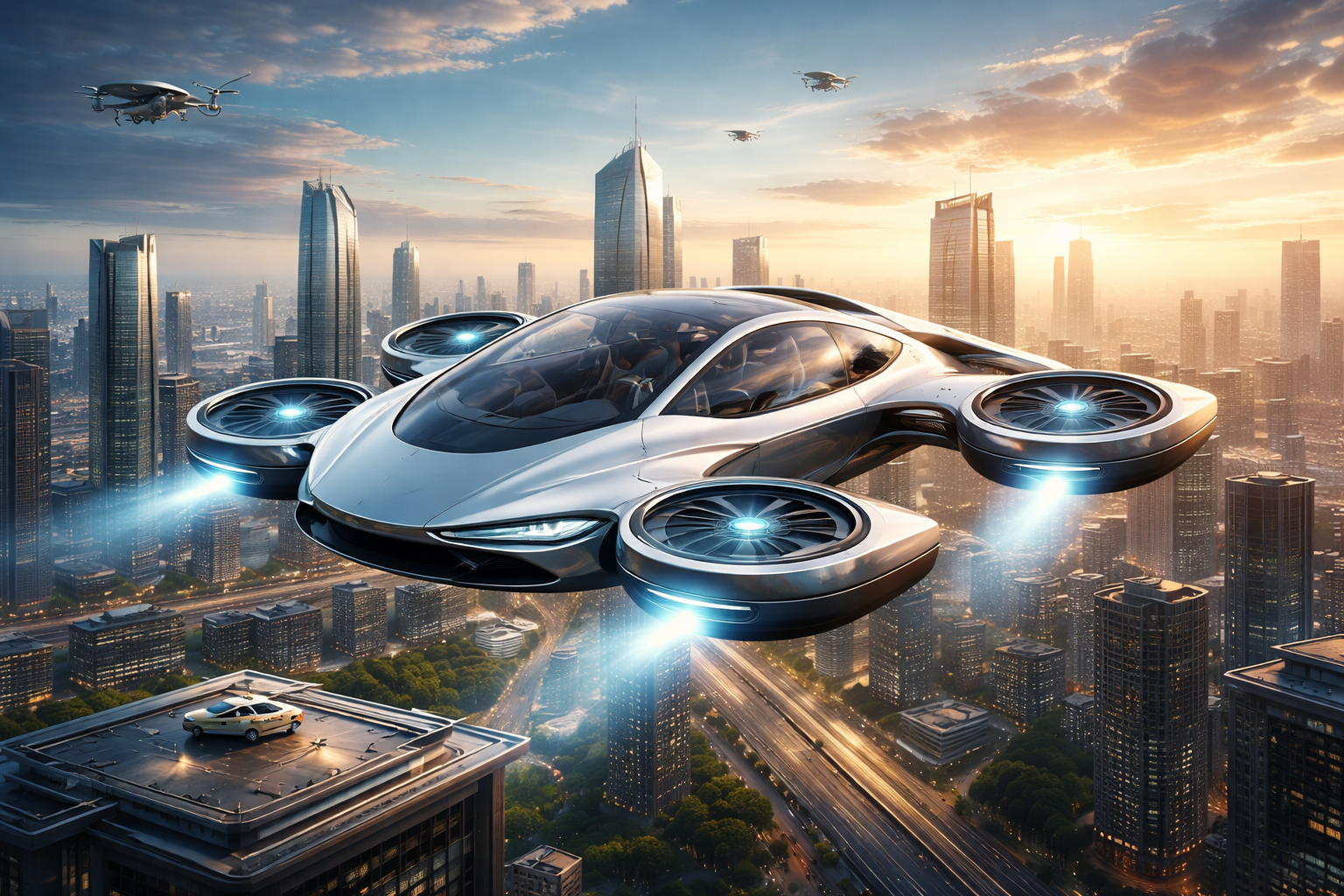
Why Flying Cars Still Aren’t Practical for Everyday Life
In March 2026, Joby Aviation flew the first aircraft it plans to use in the final stage of US certification. It takes off vertically, tilts its propellers forward and flies on wings. It can carry a pilot and four passengers. But the aircraft is still going through certification. eVTOLs can already fly, but flying cars still aren’t practical for everyday life. Making them safe and affordable enough for daily use is the real challenge.
The name “flying car” makes the idea sound simpler than it is. Most vehicles being developed are not road cars that can take off from the street. They are small aircraft, usually called eVTOLs, that would carry passengers between approved landing sites. They may work as air taxis. Owning one like a normal car is another matter.
These Vehicles Are Aircraft, Not Cars
When something goes wrong, a car can usually slow down and pull over. Even after a tyre failure or loss of power, it remains on the ground. An aircraft cannot simply pull over. A fault during take-off or landing must be handled immediately. Critical systems must keep working even when one component fails.
The US Federal Aviation Administration classifies many eVTOLs as “powered-lift” aircraft because they combine features of aeroplanes and helicopters. They require trained pilots and must meet aviation safety rules. Owning one would be closer to owning a small plane than an electric car.
Flying Uses More Energy Than Driving
A car’s tyres carry its weight. Its motor only has to move it along the road. An eVTOL must use battery power to lift its full weight during take-off, hovering and landing. Carrying passengers makes that harder. It uses less energy once the wings take over in forward flight. But it still needs enough power for vertical take-off and landing, along with a reserve for delays, route changes or an unsuccessful landing attempt.
A bigger battery adds range, but it also adds weight. The aircraft may then need larger wings, stronger parts or more powerful motors. NASA has identified the relatively low energy density of current batteries as one of the main limits on electric vertical flight. Battery aircraft can handle short routes, but adding range usually means carrying fewer passengers or building a heavier aircraft.
Cities Need Vertiports, Not Parking Spaces
An eVTOL cannot land wherever a passenger wants to go. A landing site needs clear flight paths, safe distances from nearby buildings, charging equipment and emergency access. These sites are known as vertiports.
The European Union Aviation Safety Agency has published specifications covering landing areas, obstacle clearance and operations in congested urban environments. An empty rooftop is not automatically a vertiport. It must carry the aircraft’s weight, provide safe access and handle rotor downwash. It also needs enough electrical capacity to charge the batteries.
A few vertiports could be built near airports or business districts. A citywide network would need far more land and money. There is also a practical question: how much time would passengers really save? A ten-minute flight still requires a trip to the vertiport, check-in time and another journey after landing. It makes sense on routes such as an airport to a city centre, but much less sense for scattered journeys across different neighbourhoods.
Aircraft Safety Makes Them Expensive
eVTOLs use backup motors, batteries and flight computers so that one failure does not bring down the aircraft. Those backup systems add weight and make the aircraft more expensive to maintain. Aircraft need regular inspections, approved repairs and detailed maintenance records. Their batteries also need close monitoring for heat, damage and loss of capacity. For aircraft flying over crowded areas, the standard is particularly demanding.
EASA’s requirements for urban operations include the ability to continue safe flight and landing after certain failures, since there may be nowhere suitable to land immediately below. Those requirements make private ownership expensive and difficult.
A commercial operator can employ pilots, maintain a fleet in one place and use fixed landing sites. A private owner would need much of the same support for a single aircraft.
Quieter Than a Helicopter Is Not Silent
Electric eVTOLs can be quieter than helicopters, especially when they use several small propellers instead of one large rotor. The problem starts when flights become frequent. People living near a vertiport would hear repeated take-offs and landings throughout the day. A sound that seems acceptable during one demonstration may become irritating when it returns every few minutes.
NASA created a dedicated working group to study urban air-mobility noise because existing aircraft measurements do not answer every question raised by frequent low-altitude operations.
A laboratory noise figure cannot show what repeated flights will sound like to people living below them.
Weather Will Still Cancel Flights
Cars can often slow down in bad weather. Small aircraft may have to stop flying. Strong winds use more energy and make take-off or landing harder. Fog, heavy rain and thunderstorms can stop flights. Tall buildings can also create turbulence near vertiports.
Weather delays are more serious when passengers have another flight to catch. Operators would need alternative landing sites, diversion plans and enough battery reserve to respond to changing conditions.
European operating guidance for urban air mobility already places emphasis on landing-site availability and energy management before departure.
Bad weather will still ground some flights.
Urban Airspace Cannot Work Like an Open Road
A few air taxis on fixed routes could use existing aviation systems. Thousands of personal aircraft would be much harder to manage. Personal aircraft would have to avoid planes, helicopters, drones, restricted areas, buildings and one another. Routes would change with the weather, and landing slots would have to be timed so aircraft were not left hovering.
Automation could manage planned routes and safe distances. It would still have to cope with communication failures, incorrect location data and emergency landings. The system would need clear rules about who receives priority and what happens when an aircraft loses contact. The FAA’s current rules are designed for controlled early services, not unrestricted personal flying.
The First Services Will Be Expensive
Operators must pay for pilots, maintenance, charging, insurance, vertiport fees and replacement batteries. Some flights will also travel empty to collect passengers. Joby’s planned aircraft carries four passengers in addition to the pilot. Even a full flight spreads those costs across only four passengers.
Early services will probably focus on airport transfers, business travel and emergency transport rather than daily commuting. Pilotless flights could lower costs later, but carrying passengers without a pilot would require years of testing and certification.
Air Taxis Are More Likely Than Personal Flying Cars
The first services will use certified aircraft, trained pilots, fixed landing sites and limited routes.
Passengers will book a seat rather than own the aircraft. They may save time on a few routes, but they will not replace roads or railways.
Final Takeaway
Electric air taxis may become useful on fixed routes between airports, business districts and other busy locations. That is very different from owning a flying car.
Batteries, safety rules, landing sites, weather and cost still make personal use impractical. That is why flying cars still aren’t practical as normal family transport.
Related Reads
Why Self-Driving Cars Can’t Be 100% Perfect