For decades, science fiction imagined a future where machines diagnose diseases instantly, perform flawless surgeries, and replace human doctors completely. Today, that future feels closer than ever. AI can read scans. Predict risks. Support robotic surgery. Analyse patient data faster than humans. Help hospitals work more efficiently. But one truth remains unchanged: Medicine is not only pattern recognition. It is judgement, trust, ethics, responsibility, and human presence during uncertainty. That is why robot doctors may become powerful medical assistants. But fully replacing human doctors is still unrealistic. Robot doctor and human doctor showing why medical AI can assist healthcare but cannot fully replace human judgement, empathy and trust The Core Truth AI is excellent at finding patterns in data. But patients are not just data. A patient may arrive with unclear symptoms, fear, pain, family pressure, cultural concerns, financial limits, and emotional uncertainty. A machine can process information. A doctor must understand the person behind it. That difference changes everything. 1. Medicine Needs Human Judgement Diagnosis is not always simple. Two patients with the same disease may show different symptoms, different side effects, different recovery speeds, and different hidden risks. AI can suggest possibilities. But real medicine often happens in the grey area — where symptoms are confusing, test results conflict, and the safest choice is not obvious. A doctor does more than choose the most likely answer. A doctor reads the full situation. That includes the body, the history, the patient’s fear, the family context, and the risk of being wrong. This kind of judgement cannot be fully automated. 2. Empathy Is Not a Bonus In medicine, empathy is not decoration. It is part of care. When someone hears life-changing news — cancer, organ failure, a risky surgery, or a long-term condition — they do not only need medical facts. They need presence. They need someone who can explain, listen, pause, reassure, and respond to fear in a human way. AI may generate comforting words. But it does not truly share responsibility for the pain, uncertainty, and emotional weight of illness. That is why human connection remains one of the strongest limits to full replacement. 3. Ethical Decisions Need Human Accountability Doctors do not only solve technical problems. They also face moral decisions. Should an elderly patient undergo a risky surgery? Should life support continue? How should bad news be explained to a family? What happens when patient wishes conflict with medical probability? These choices involve dignity, consent, culture, values, and responsibility. No algorithm can truly carry moral accountability in the way a human professional can. AI may support the decision. But the final responsibility must remain human. 4. Robotic Surgery Still Needs Surgeons Robotic surgery is one of medicine’s greatest technological achievements. But the word “robotic” can be misleading. Most robotic surgeries are not independent machines operating alone. They are advanced tools guided by trained surgeons. During surgery, unexpected situations can appear: bleeding, tissue variation, abnormal anatomy, instrument difficulty, or sudden complications. A surgeon must adapt in real time. That flexibility is the key. Technology can improve precision. But precision is not the same as independent medical judgement. 5. Trust Cannot Be Programmed Completely Healthcare depends on trust. Patients want to know who is responsible when something goes wrong. If an AI system gives a wrong diagnosis, who answers? The hospital? The software company? The engineer? The doctor? The AI itself? This accountability gap is one of the biggest barriers to fully autonomous robot doctors. Patients do not only want speed. They want explanation, responsibility, reassurance, and someone they can question. In life-critical decisions, trust still favours human doctors. 6. AI Works Best as a Partner, not a Replacement The future of medicine is not AI versus doctors. It is AI with doctors. AI can help doctors detect patterns faster, reduce paperwork, improve scan analysis, support treatment planning, and make hospitals more efficient. That is powerful. But the best use of medical AI is not removing the doctor from the room. It is giving doctors better tools. A robot may assist the hand. AI may assist the mind. But the human doctor still carries the judgement, responsibility, and trust at the center of care. Final Thought Robot doctors will keep improving. They will make medicine faster, sharper, and more data-driven. But replacing human doctors completely is different. A hospital is not just a system of machines. It is a place where people face pain, fear, hope, risk, and life-changing decisions. That is why full replacement remains unrealistic. Not because AI is weak. But because medicine is deeply human. Conclusion Robot doctors can transform healthcare. They can improve diagnosis, surgery, monitoring, and hospital efficiency. But they cannot fully replace human doctors because medicine depends on judgement, empathy, ethics, accountability, trust, and real-time human decision-making. The future is not doctor versus machine. The future is better doctors using better machines. And that partnership is far more powerful than replacement.
|

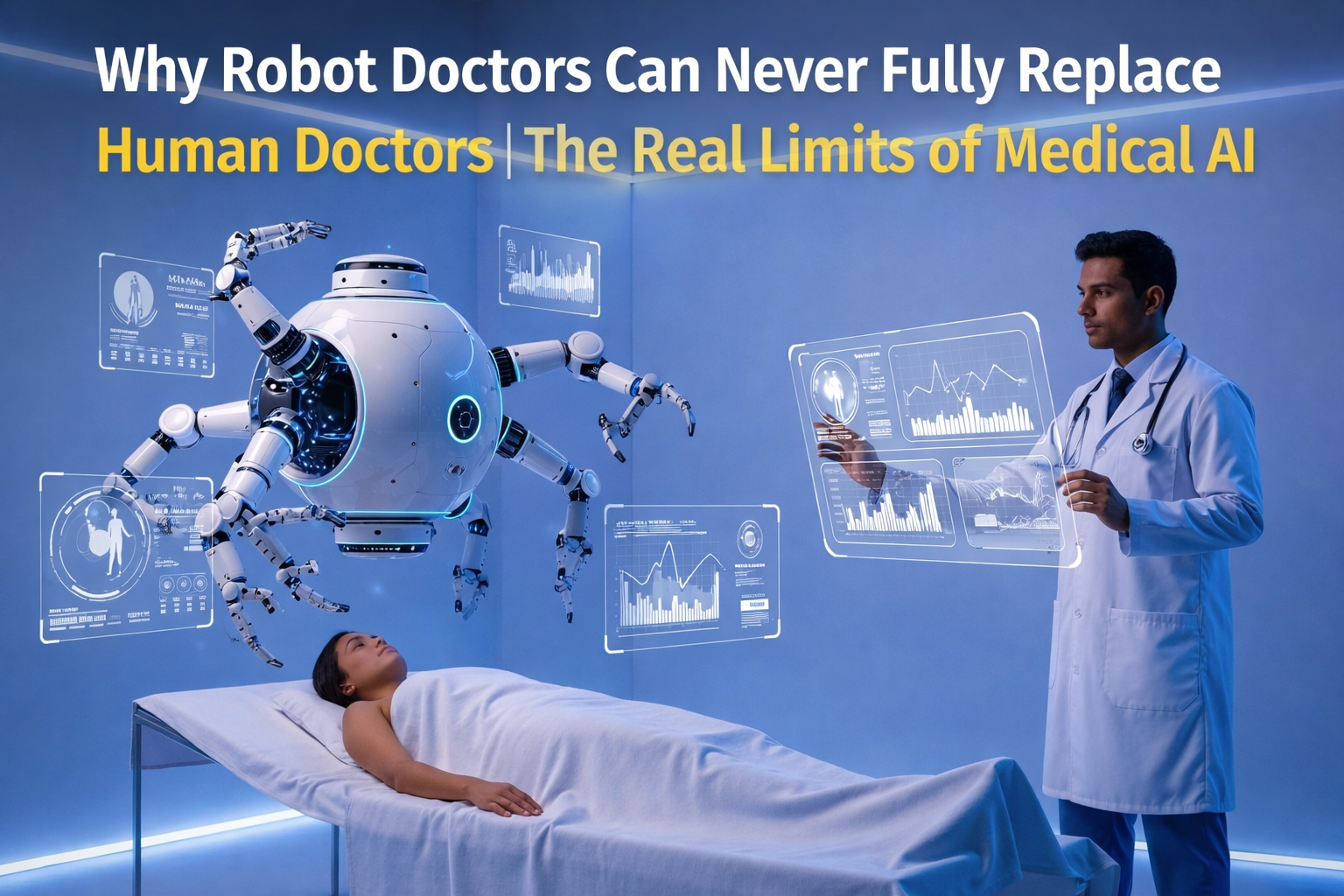
Why Robot Doctors Can Never Fully Replace Human Doctors

For decades, science fiction imagined a future where machines diagnose diseases instantly, perform flawless surgeries, and replace human doctors completely.
Today, that future feels closer than ever.

AI can read scans.
Predict risks.
Support robotic surgery.
Analyse patient data faster than humans.
Help hospitals work more efficiently.

But one truth remains unchanged:
Medicine is not only pattern recognition.
It is judgement, trust, ethics, responsibility, and human presence during uncertainty.
That is why robot doctors may become powerful medical assistants.
But fully replacing human doctors is still unrealistic.

AI is excellent at finding patterns in data.
But patients are not just data.
A patient may arrive with unclear symptoms, fear, pain, family pressure, cultural concerns, financial limits, and emotional uncertainty.

A machine can process information.
A doctor must understand the person behind it.
That difference changes everything.

Medicine Needs Human Judgement

Diagnosis is not always simple.
Two patients with the same disease may show different symptoms, different side effects, different recovery speeds, and different hidden risks.

AI can suggest possibilities.
But real medicine often happens in the grey area — where symptoms are confusing, test results conflict, and the safest choice is not obvious.

A doctor does more than choose the most likely answer.
A doctor reads the full situation.
That includes the body, the history, the patient’s fear, the family context, and the risk of being wrong.
This kind of judgement cannot be fully automated.

Empathy Is Not a Bonus

In medicine, empathy is not decoration.
It is part of care.

When someone hears life-changing news — cancer, organ failure, a risky surgery, or a long-term condition — they do not only need medical facts.
They need presence.
They need someone who can explain, listen, pause, reassure, and respond to fear in a human way.

AI may generate comforting words.
But it does not truly share responsibility for the pain, uncertainty, and emotional weight of illness.
That is why human connection remains one of the strongest limits to full replacement.

Ethical Decisions Need Human Accountability

Doctors do not only solve technical problems.
They also face moral decisions.
Should an elderly patient undergo a risky surgery?
Should life support continue?
How should bad news be explained to a family?
What happens when patient wishes conflict with medical probability?
These choices involve dignity, consent, culture, values, and responsibility.

No algorithm can truly carry moral accountability in the way a human professional can.
AI may support the decision.
But the final responsibility must remain human.

Robotic Surgery Still Needs Surgeons

Robotic surgery is one of medicine’s greatest technological achievements.
But the word “robotic” can be misleading.
Most robotic surgeries are not independent machines operating alone.
They are advanced tools guided by trained surgeons.

During surgery, unexpected situations can appear: bleeding, tissue variation, abnormal anatomy, instrument difficulty, or sudden complications.
A surgeon must adapt in real time.
That flexibility is the key.
Technology can improve precision.
But precision is not the same as independent medical judgement.

Trust Cannot Be Programmed Completely

Healthcare depends on trust.
Patients want to know who is responsible when something goes wrong.

If an AI system gives a wrong diagnosis, who answers?
The hospital?
The software company?
The engineer?
The doctor?
The AI itself?

This accountability gap is one of the biggest barriers to fully autonomous robot doctors.
Patients do not only want speed.
They want explanation, responsibility, reassurance, and someone they can question.
In life-critical decisions, trust still favours human doctors.

AI Works Best as a Partner, not a Replacement

The future of medicine is not AI versus doctors.
It is AI with doctors.
AI can help doctors detect patterns faster, reduce paperwork, improve scan analysis, support treatment planning, and make hospitals more efficient.
That is powerful.

But the best use of medical AI is not removing the doctor from the room.
It is giving doctors better tools.
A robot may assist the hand.
AI may assist the mind.
But the human doctor still carries the judgement, responsibility, and trust at the center of care.

Final Takeaway: Why Robot Doctors Can Never Fully Replace Human Doctors

Robot doctors will keep improving.
They will make medicine faster, sharper, and more data-driven.
But replacing human doctors completely is different.

A hospital is not just a system of machines.
It is a place where people face pain, fear, hope, risk, and life-changing decisions.
That is why full replacement remains unrealistic.
Not because AI is weak.
But because medicine is deeply human.

Robot doctors can transform healthcare.
They can improve diagnosis, surgery, monitoring, and hospital efficiency.
But they cannot fully replace human doctors because medicine depends on judgment, empathy, ethics, accountability, trust, and real-time human decision-making.

The future is not doctor versus machine.
The future is better doctors using better machines.

Related Reads

Why Self-Driving Cars Can’t Be 100% Perfect
Why We Can’t Hack the Human Brain Like a Computer

Why Artificial Intelligence Cannot Become Fully Human

Related Reads

Leave a Reply

Your email address will not be published. Required fields are marked *