Why Shrinking Like Ant-Man Is Impossible
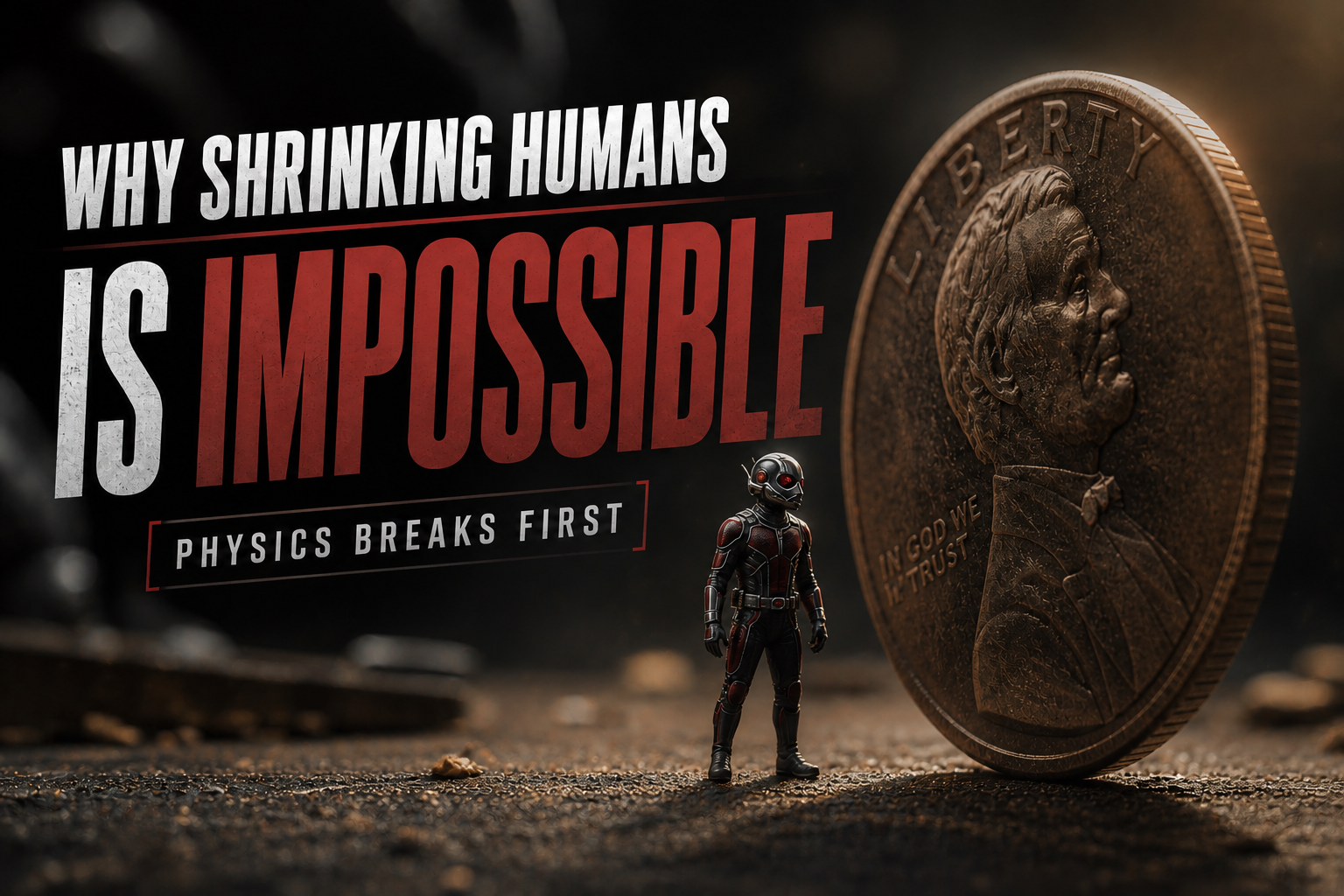
Shrinking like Ant-Man means becoming the size of an insect, slipping through tiny spaces and still hitting with the force of a full-grown man. It works on screen, but a real body could not survive the same change. At that size, it could not keep the same mass, strength, organs and brain.
Shrinking Is Not the Same as Squeezing
Shrinking a person is not a matter of squeezing empty space out of atoms. Compressing matter that far would require extreme pressure and would destroy ordinary human tissue. The other option is to remove matter, but that means removing the cells that make up the brain, muscles, bones, blood and organs. Most of the person would be gone.
Where Would the Mass Go?
Suppose a 70-kilogram person shrank to the height of an ant but kept the same mass. The result would be an extremely dense body, with every step pressing 70 kilograms onto an area only a few millimetres wide. Soft surfaces could be pierced, while moving or stopping would remain difficult because the body would still have the inertia of a full-sized adult.
The films sometimes let Ant-Man keep his mass and punching power. Yet he can also ride an ant, stand on someone’s shoulder and cross objects that could not support 70 kilograms concentrated in one spot. Those two versions cannot both be true. If he is light enough for an ant to carry, he no longer has the momentum of a full-sized man.
Why Shrinking Like Ant-Man Changes Strength and Movement
When a body scales down, its volume and mass fall faster than its surface area—a relationship known as the square-cube law. If Ant-Man’s mass shrank with his body, he would become far lighter. His muscles might be strong relative to his size, but their total force would be much lower. Ants can carry many times their own weight for the same reason. That does not give them the punch of a human.
A tiny person might survive a long fall because air resistance matters more at small scales. But the same effect would make air a bigger obstacle. A breeze that feels harmless to us could knock the person over or carry them away.
The Human Body Cannot Simply Scale Down
Cells can shrink only so far before they stop working. Red blood cells need room for haemoglobin, muscle fibres need their contractile machinery, and nerves need membranes and ion channels.
Keeping the cells at normal size creates the opposite problem. An insect-sized body could hold only a tiny fraction of an adult’s cells—too few to build a functioning brain, muscles, blood supply and organs.
The Brain Has a Hard Limit
The brain creates an even bigger problem because it contains tens of billions of neurons and far more connections between them. Remove most of those cells and the person would lose memories and personality; shrink them thousands of times and they would no longer work. Either way, the same human mind cannot fit inside an insect-sized skull.
Heat Would Escape Too Quickly
A small body has a much higher surface-area-to-volume ratio, so it loses heat quickly. Small animals compensate with high metabolic rates. A shrunken human would not suddenly acquire the metabolism of a mouse or hummingbird, and without major biological changes, body temperature would fall fast.
Sight and Voice Would Change
At insect scale, tiny pupils would gather far less light, while diffraction would blur fine detail. Vision would be dimmer and less sharp, especially in low light. Smaller vocal cords would push the voice to a much higher pitch, and the sound would be weak to full-sized listeners.
The Movie Keeps Changing the Rules
The films do not follow one clear rule. Sometimes a shrunken object keeps its mass; in other scenes, it becomes light enough to carry in a pocket. Ant-Man can hit like a full-sized man, yet an ant can carry him. A tank fits on a keychain without pulling its owner to the floor. Keep the original mass and the tiny object becomes dangerously dense. Reduce the mass and its strength, momentum and punching power fall with it.
Final Takeaway
Ant-Man has to be tiny, light enough for an ant to carry and strong enough to punch like a full-grown man. Those things cannot happen together.
Keep his normal mass and he becomes dangerously dense. Reduce his mass and he loses most of his force. Shrink his cells and brain that far, and they stop working.
A real human could not shrink to insect size and remain the same person.
Related Reads
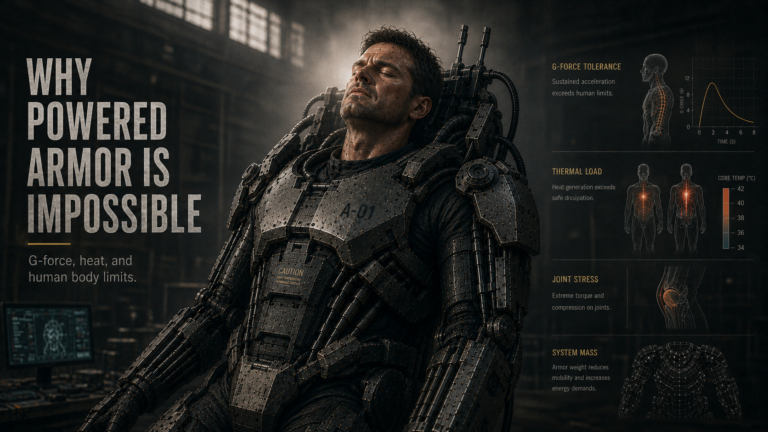
Why Iron Man’s Suit Is Impossible in Real Life