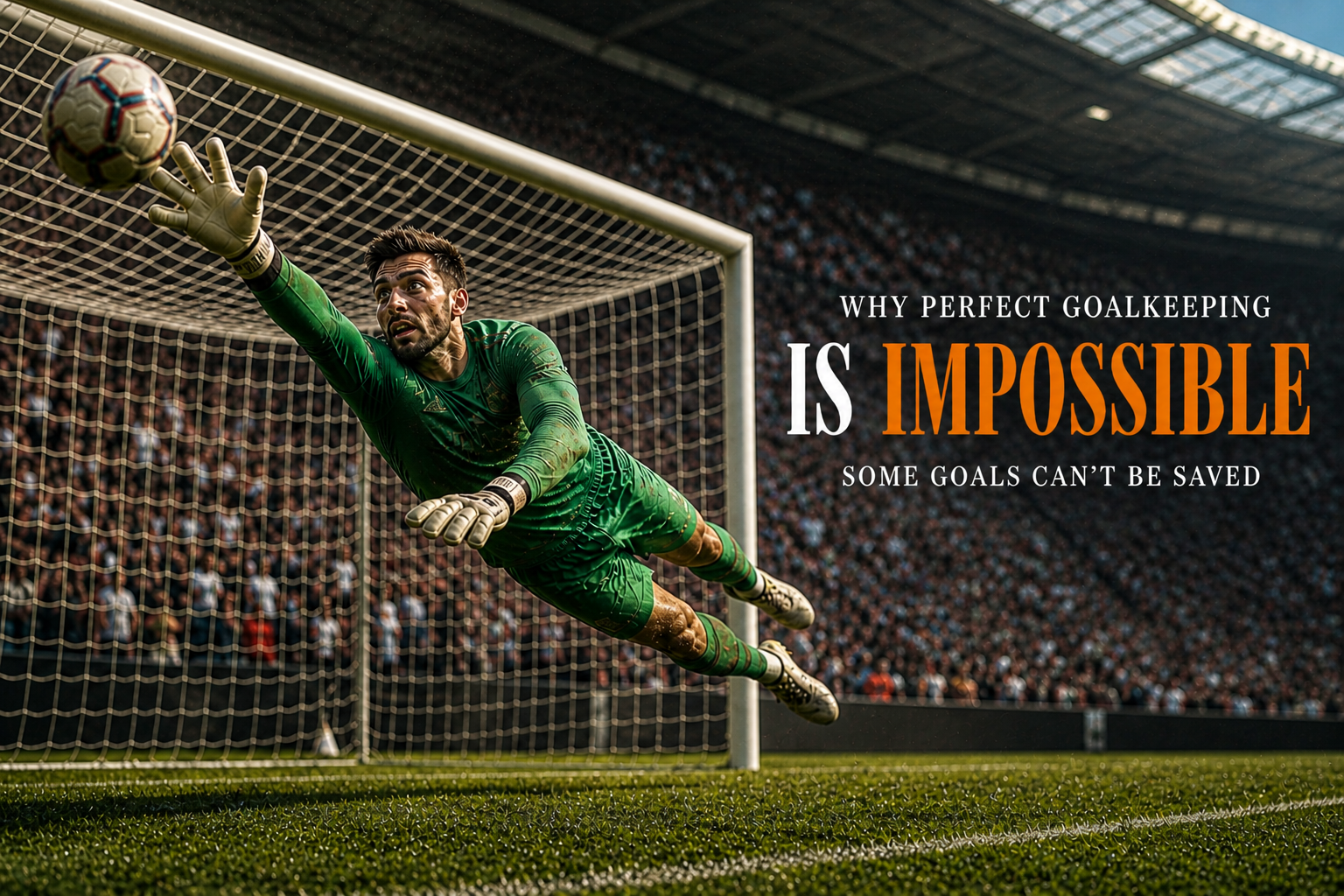
Why Perfect Goalkeeping Is Impossible in Football
Perfect goalkeeping is impossible, yet goalkeepers are still blamed for goals they had little chance of stopping. A shot can come through a crowd, change direction off a defender or arrive from close range before the keeper is properly set. The position demands quick decisions, but it never gives complete control.
When the Ball Arrives Too Quickly
A shot from 10 or 12 yards can reach the goal in well under half a second. In that time, the goalkeeper has to read the strike, choose a direction and move. A blocked view or a late deflection cuts that time even further. Some shots simply arrive too quickly to be stopped.
A Goalkeeper Cannot Cover Every Angle
The goal is 7.32 metres wide and 2.44 metres high. A goalkeeper cannot cover every part of it at once. Move towards the near post and space opens at the far post. Stay central and a well-placed shot can still find either corner.
Why Penalties Favour the Taker
The penalty mark is 11 metres from goal, and a well-struck kick can arrive in about half a second or less. That leaves the goalkeeper with a difficult choice: move early and risk choosing the wrong side, or wait for a clearer clue and lose valuable time.
Elite keepers study the taker’s run-up, body shape and previous penalties. Those clues can help, but the taker can still send the ball the other way.
When the Goalkeeper Cannot See the Shot
Sometimes the goalkeeper does not see the ball until it has cleared the crowd in front. A deflection can then send it away from the path they first read.
By the time the goalkeeper picks up the ball, it may already be too close to stop or heading in a new direction after a deflection.
Why Clean Sheets Can Mislead
A clean sheet does not prove that a goalkeeper was flawless. It may owe just as much to strong defending, poor finishing or an opposition that created very little.
Conceding does not automatically mean the goalkeeper was at fault either.
The Defence Shapes What the Goalkeeper Faces
A goalkeeper can only deal with what the players in front of them leave behind. A broken defensive line, an unmarked runner or a cut-back across the six-yard box can create a chance that no keeper can be expected to stop consistently.
The goalkeeper is judged alone, but the situation is usually created by the whole team.
What the Numbers Show
Expected goals, or xG, estimates how likely a shot is to result in a goal. Most models value a penalty at roughly 0.76 to 0.78 xG. Roughly three out of every four penalties are scored.
Post-shot xG gives a better picture of goalkeeping because it considers where the shot was placed and, in some models, the goalkeeper’s position.
The numbers do not excuse genuine mistakes. They help separate them from shots that were extremely difficult to save.
Final Takeaway: Why Perfect Goalkeeping Is Impossible
Perfect goalkeeping is impossible because no goalkeeper controls everything around a shot.
The ball may come through a crowd, take a deflection or reach the corner before the keeper can get there.
The best goalkeepers still concede. What separates them is how often they save shots that most others would not.
Related Reads
Why Scoring in Every Football Match Is Impossible