3 Team India Records That May Never Be Broken
Most cricket records belong to individual players. These three Team India records were built across different captains, formats and generations.
1. India’s 18 Consecutive Home Test Series Wins
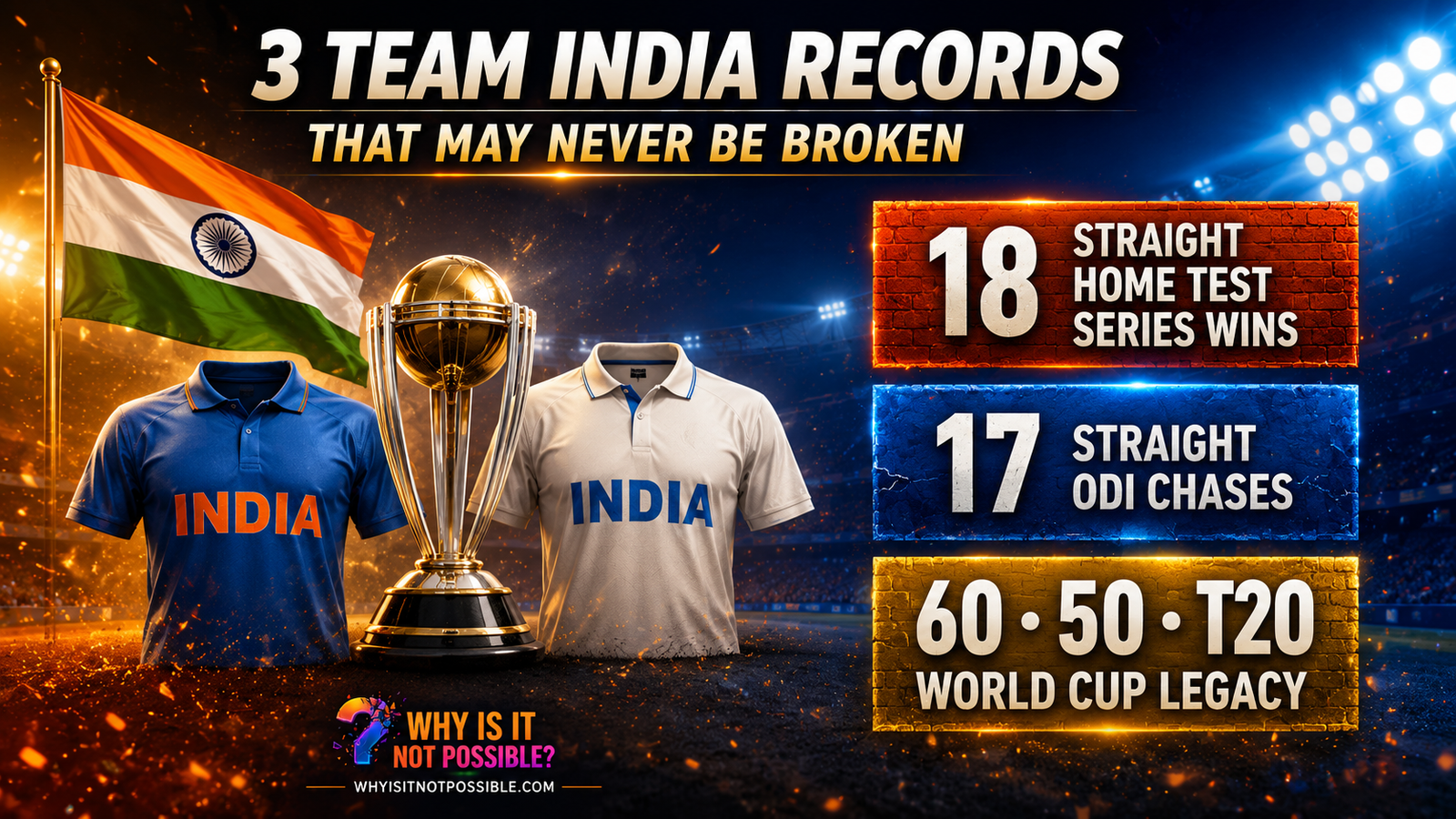
Between 2013 and 2024, India won 18 consecutive home Test series. The run lasted until New Zealand ended it in 2024. The streak survived changes in captaincy, players and opposition. India found different ways to win, using spin on turning pitches, pace on livelier surfaces and batting depth when matches became difficult.
Why It May Last
To go past 18, a team would have to remain unbeaten in home series for more than a decade.
One strong touring side or one difficult transition would be enough to stop the run.
It was not the achievement of one captain, batter or bowler. Different Indian teams kept the streak alive for more than ten years.
2. India’s 17 Consecutive Successful ODI Chases
Between September 2005 and May 2006, India won 17 consecutive ODIs while batting second.
The sequence covered different targets, venues and match situations. India repeatedly kept wickets in hand, built partnerships through the middle overs and finished chases without allowing the asking rate to take control.
Why This Record May Survive
One failed chase ends the sequence. Reaching 18 would require a team to keep winning while batting second against different attacks, on different surfaces and with targets ranging from routine to demanding. ODI series are now shorter and teams rotate players more often, reducing the chances of building such a long sequence.
3. India’s World Cup Titles in Three Different Formats
India are the only men’s team to have won World Cups in the 60-over, 50-over and T20 formats:
• 60-over World Cup — 1983
• 50-over World Cup — 2011
• T20 World Cups — 2007, 2024 and 2026
The first came in the 60-over era in 1983. India later won the 50-over World Cup in 2011 before adding three T20 titles.
Who Can Still Match It?
No team can now add a 60-over World Cup to its record because that format ended after 1983.
West Indies, however, already have 60-over titles from 1975 and 1979 and T20 titles from 2012 and 2016. A future 50-over World Cup victory would allow them to match India.
Final Takeaway: Why These Team India Records May Last
India’s home Test streak and ODI chase record can still be broken, but either would take years of consistent winning.
The World Cup record is different. West Indies are now the only team capable of matching it. For every other country, the chance disappeared when the 60-over format ended.
Related Reads
Team India: The First Team to Achieve These Historic T20I Milestones
Virat Kohli ODI Records That May Never Be Broken
Sachin Tendulkar Records That May Never Be Broken in Cricket History