Why AI Farming Cannot Replace Farmers Completely
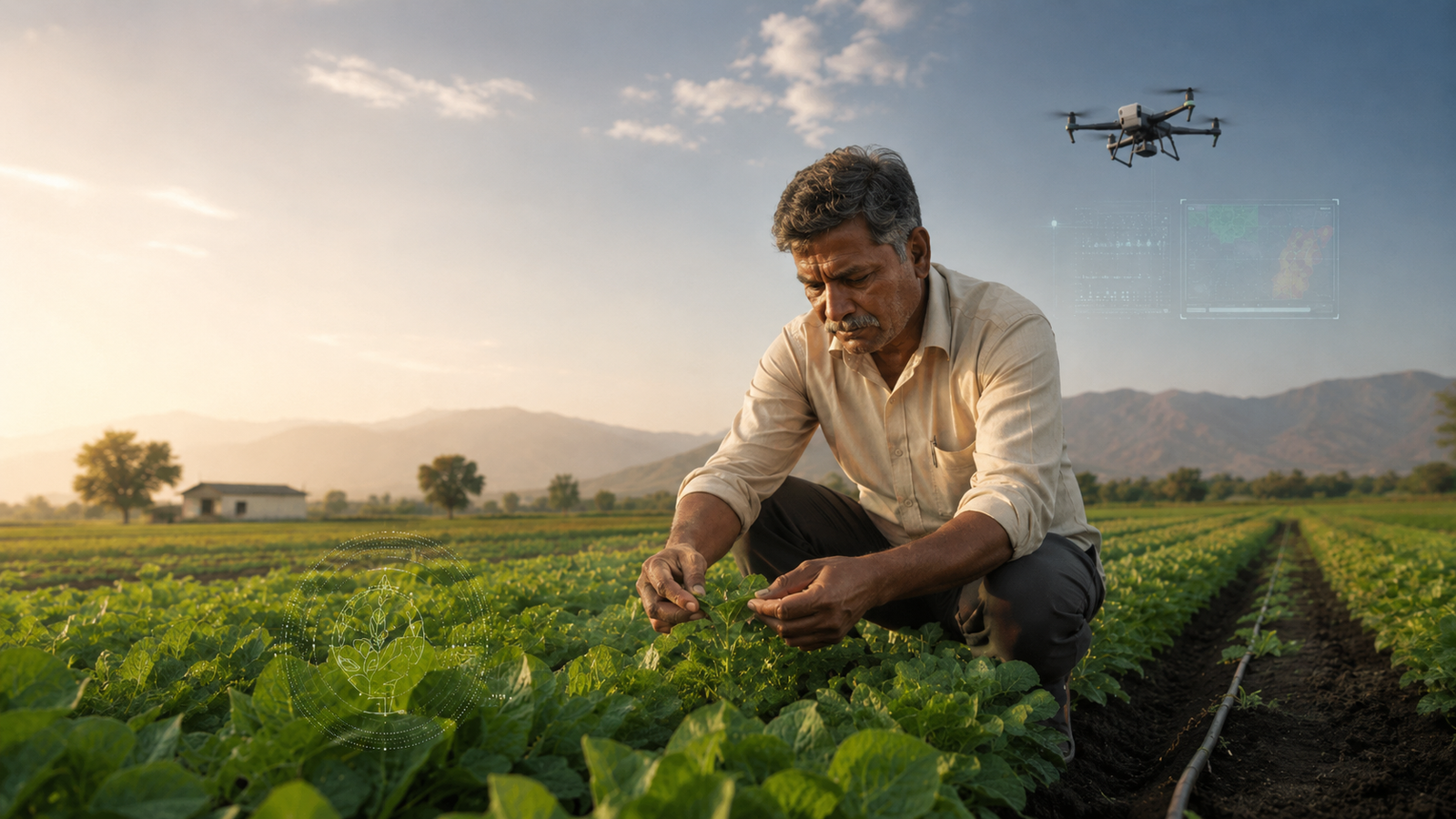
AI farming is already changing agriculture. Farmers can use drones to inspect large fields, sensors to check soil moisture and software to track weather, pests, crop health and market prices. They save time and can catch problems early. But using AI on a farm is not the same as replacing the farmer.
Farming is never fully predictable. Weather shifts, soils vary, and the same crop can behave differently from one season to the next. Advice that works on one farm may fail a few kilometres away.
Every Field Is Different
Most AI farming tools look for patterns in past data and use them to make predictions. Two fields in the same village can react differently to the same weather. One may hold water while another dries quickly. A slope, a line of trees or one low patch can change how the crop grows.
A weather report or satellite image may miss these small differences. A farmer who knows the land may notice them immediately. The field also changes from one season to the next. Rain may arrive late, a pest may appear early, or a seed that performed well last year may struggle in hotter weather.
Past data helps, but it cannot tell a farmer exactly what this season will do. The farmer still has to check whether the advice makes sense for that field.
The Farmer Takes the Risk
For the company, it is a bad prediction. For the farmer, it can mean losing part of the crop. An app may recommend spraying, only for unexpected rain to wash the pesticide away. An irrigation system may pump groundwater even though canal water is expected the next day. Fertilizer advice based on incomplete soil information may damage the crop instead of helping it.
On a farm, mistakes cost money, labour and time. In a bad season, one wrong call can affect the next crop as well. Farmers cannot afford to follow every recommendation blindly. They will check it against the crop, the weather, the water available and what they already know.
Bad Data Means Bad Advice
AI needs reliable data, but farm records are often incomplete. Many farms do not have detailed records of soil condition, rainfall, pest attacks or past yields. Local weather information may be limited. Internet access can be unreliable, and sensors may be too expensive for small farmers.
Even when data is available, it may be too broad, too old or collected somewhere else. A district-level forecast cannot always show what will happen in one village.
A pest-identification app may work well with clear photographs but struggle with a blurred image taken in poor light. A system trained elsewhere may not understand local seeds, soils or farming methods.
The World Bank has pointed to weak internet access, the cost of digital devices and limited technical skills as barriers for small farmers. Better software alone will not fix that.
A Farmer Knows Things the Data Does Not
Farmers learn by watching the same land over many seasons. They know which part of the field remains wet after rain, where pests usually appear first and which local seed performs better when rainfall is uncertain. They also know which workers turn up on time, which trader delays payment and which supplier cannot be trusted. No crop model sees all of that.
Some warning signs are hard to put into numbers. The leaves may look slightly dull, or the soil may feel different after rain. A crop can look healthy from the road and still be struggling at the roots. Sensors can measure moisture, temperature and plant health. Someone still has to know what is normal for that field.
Most Farmers Cannot Afford Full Automation
The popular picture of AI farming—driverless tractors, drones, robots and sensors everywhere—is not how most farms operate. Buying the machine is only the start. There are also software charges, repairs, batteries, internet costs, training and replacement parts. A machine can work well and still be a bad investment if the farm is too small to recover the cost. The OECD lists cost, limited skills, difficult systems and mistrust as major barriers to digital farming.
Large farms are likely to adopt advanced automation more quickly because they can spread the cost across a larger area. Small farmers may use cheaper tools such as weather alerts, market-price updates, pest-detection apps or shared drone services.
For many farmers, AI will arrive through a mobile phone long before a robot enters the field. The highest-yield option is not always the best. A farmer may avoid a crop that needs too much water or choose a safer crop because one failed season would be too costly.
Where AI Can Help
AI still has a useful role in farming. It can spot disease early, improve irrigation, estimate yields and give farmers better weather and market information. FAO has recognised the role of digital agriculture in precision farming, climate-smart agriculture, supply chains and market access.
AI may also replace certain tasks. Machines can inspect crops, remove weeds, sort produce and control irrigation. Some large farms may use autonomous vehicles for routine work. But replacing a task is not the same as replacing the farmer. A farmer still has to choose what to grow, when to sow, how much to spend, when to irrigate, when to harvest and where to sell. A machine handling one job does not take over all of them.
The Farmer’s Role Will Change
Farmers may spend less time checking fields by hand and more time reading sensor and weather data. They will still have to judge whether the advice suits their land, manage workers and costs, and step in when technology fails. Farmers will still need to decide when the technology is useful and when it is not.
Why the Farmer Still Matters
AI can process huge amounts of farm data, but it cannot make farming predictable. It cannot bring rain, stop every pest or guarantee a good price. It also cannot take the loss when a decision fails.
Every farm still needs someone who knows the land, weighs the risk and takes responsibility. AI will replace some tasks and improve many others, but it will not replace the farmer.
Related Reads
Why Artificial Intelligence Cannot Become Fully Human