Lionel Messi Records That May Never Be Broken
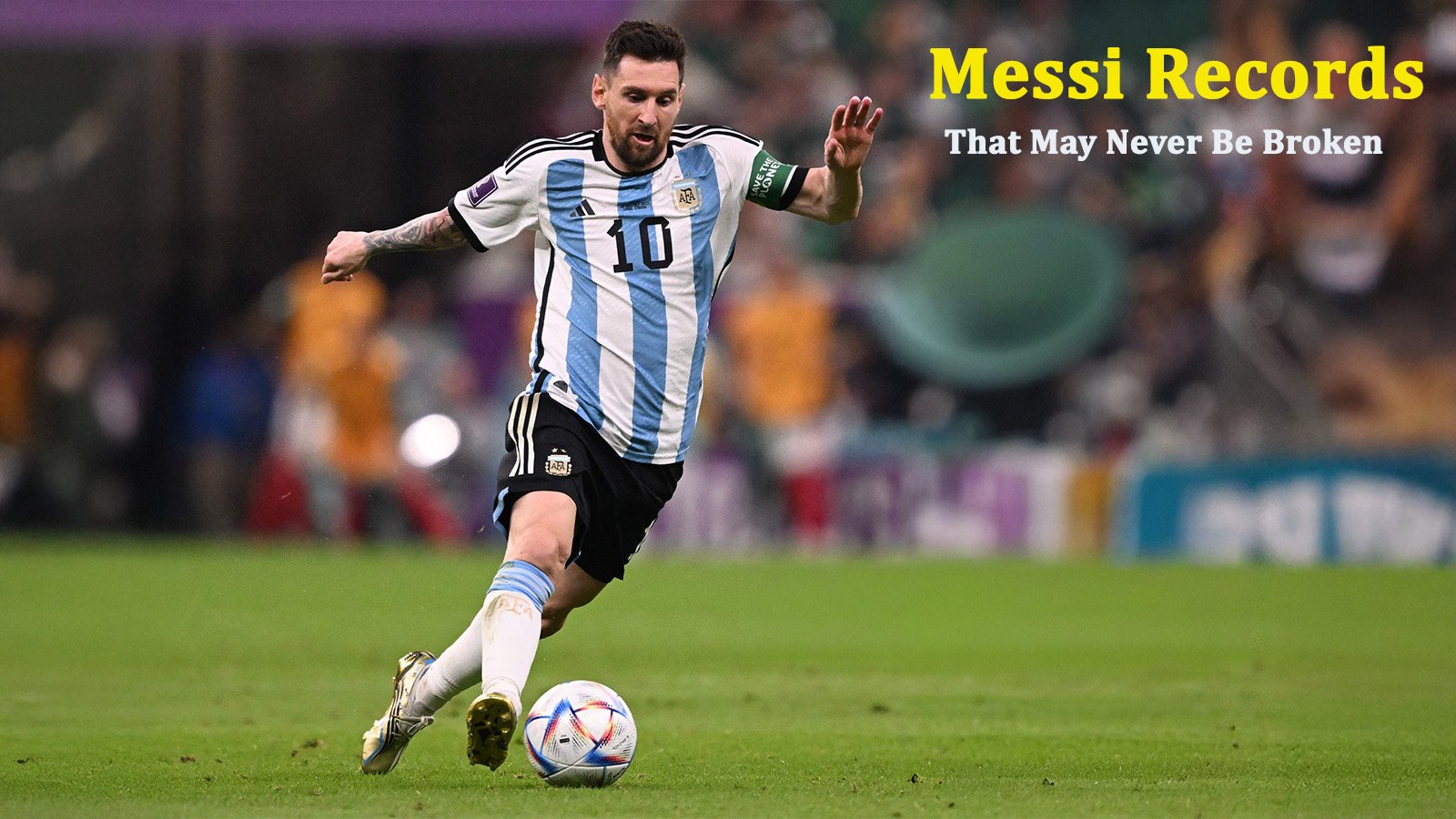
Lionel Messi records do not all feel like normal football records.
Eight Ballon d’Or awards.
672 goals for Barcelona.
91 goals in one calendar year.
474 La Liga goals.
36 La Liga hat-tricks.
The hard part was not one great season. It was the same left foot, the same club, the same league, year after year, with almost no wasted prime.
A future player may be faster, stronger, more direct. But will football give him the same stage for that long?
Watch the full documentary here:
The Ballon d’Or record came from different versions of Messi
Eight Ballon d’Or awards sounds simple only because Messi made greatness look normal.
It was never one version of him winning the same argument again and again.
There was the young Messi who played like the ball was tied to his boot.
There was the false nine Messi who turned central defenders into confused passengers.
There was the goalscoring Messi who made 50-goal seasons feel routine.
There was the older Messi who walked more, waited more, and still found the pass everyone else saw too late.
Then there was the Argentina Messi, carrying the one story people kept using against him until the World Cup finally changed the ending. To catch it, a player has to stay in the voters’ heads for more than a decade, through injuries, rivalries, team changes and new storylines.
Even Cristiano Ronaldo, Messi’s closest rival and one of the most relentless athletes football has seen, stopped at five.
The Barcelona goals belong to a world that has almost disappeared
Messi’s 672 goals for Barcelona may be the record that ages the best. Not because no player can score 600 goals for a club. Someone might have the talent. The harder part is staying.
Modern football does not leave superstars in one place for that long. Contracts get complicated, clubs rebuild faster, and players move earlier.
Messi’s Barcelona career needed a rare fit: the right player, the right club, the right age. He arrived young. He grew inside the system. He played with Xavi, Iniesta, Busquets, Alves, Neymar, Suárez, and many others who understood his game. For years, Barcelona’s football bent around him.
A striker can score plenty of goals at one club. But Messi’s number came from something deeper than finishing chances. He was the finisher, creator, tempo-setter, free-kick taker, penalty taker, and the player making the last pass. Another player getting that much trust, time and control at one club feels unlikely now.
91 goals in 2012 was not a normal peak
Every great player has a peak season. Messi’s 2012 was something else. Ninety-one goals in one calendar year sounds like a video-game number, but the mad part is how ordinary some of it felt at the time. He scored so often that people almost stopped reacting properly.
A brace became normal. A hat-trick became normal. Another left-foot finish across the keeper became normal.
The record did not come from one tournament or one purple patch. It came from month after month of the same punishment. League games, Champions League games, cup games, Argentina games. Different shirts, same rhythm.
He needs to play almost every week, score in every possible way, and stay fit while the minutes keep piling up.
Clubs protect forwards more carefully now. Squads rotate. Even the best players get pulled out before the calendar breaks them. So 91 still feels like a number from another football year.
La Liga gave Messi the stage, and he never wasted it
Messi’s 474 La Liga goals are really about staying in one league long enough to turn dominance into history. Plenty of great forwards have torn through leagues for four or five years. Messi did it for more than a decade. Different Real Madrid teams. Different Atlético Madrid sides. Different Barcelona managers. Different tactical cycles. Same result most weekends: Messi found a way onto the scoresheet. The number is huge. Getting that route again is the problem.
A future player would have to join a major league young, stay there for most of his prime, remain the main attacking reference, avoid serious injuries, and keep scoring after opponents spend years studying him.
By 2015, every La Liga defender knew what Messi wanted to do. They knew the left-foot cut inside. They knew the one-two around the box. They knew the free kick threat. They knew the burst from walking speed into chaos.
Knowing it did not mean stopping it.
The hat-tricks show how often he turned matches into private games
Thirty-six La Liga hat-tricks is ridiculous because three-goal games usually need everything to tilt your way. Messi kept punishing those chances.
Some hat-tricks were explosions. Some were slow burns. Some felt like Barcelona had control from the first whistle. Others felt like Messi simply decided the match had gone on long enough.
Once Messi found a weakness, he kept going back to it. To catch 36 La Liga hat-tricks, someone has to dominate a league for years, not just visit it for a few seasons.
El Clásico made the records heavier
Messi’s records against Real Madrid carry a different weight because El Clásico is not a normal match. It is too loud. Too political. Too emotional. Too watched. Every touch gets judged. Every miss travels around the world in seconds. Every great moment becomes part of the rivalry forever. Messi did not hide in those games.
He scored at the Bernabéu. He scored in title races. He scored in Champions League semi-finals. He scored when Madrid had world-class defenders, world-class midfielders, and Cristiano Ronaldo on the other side, keeping the rivalry at its highest level.
The hardest Lionel Messi record may be the career itself
Split Messi into numbers and the story gets smaller. The harder record is the whole career.
A boy from Rosario arrives at Barcelona. He becomes the best teenager in the world. Then the best player in the world. Then the most productive player in the world. Then the old genius who no longer has to run the match to control it. Then, finally, the World Cup winner Argentina had been waiting for.
Most careers break somewhere. A transfer goes wrong. A body fails. A manager changes everything. A dressing room turns. A national-team story collapses. A younger star takes the light. The game moves on.
Messi kept changing just enough to stay inside the argument.
Final Takeaway: Messi’s records are tied to an era football may not repeat
Messi’s numbers will be chased: the Ballon d’Ors, the club goals, the calendar-year record, the 474 La Liga goals. But chasing the number is one thing. Getting Messi’s football life is another.
Football will produce more great forwards, faster wingers and cleaner finishers.
But another Messi career? Football may not give anyone that road again.
Related Reads
Cristiano Ronaldo Records That May Never Be Broken
Why Scoring in Every Football Match Is Impossible
Why 1000 International Goals Is Nearly Impossible in Football