Why Bowlers Can’t Land a Perfect Yorker Every Ball
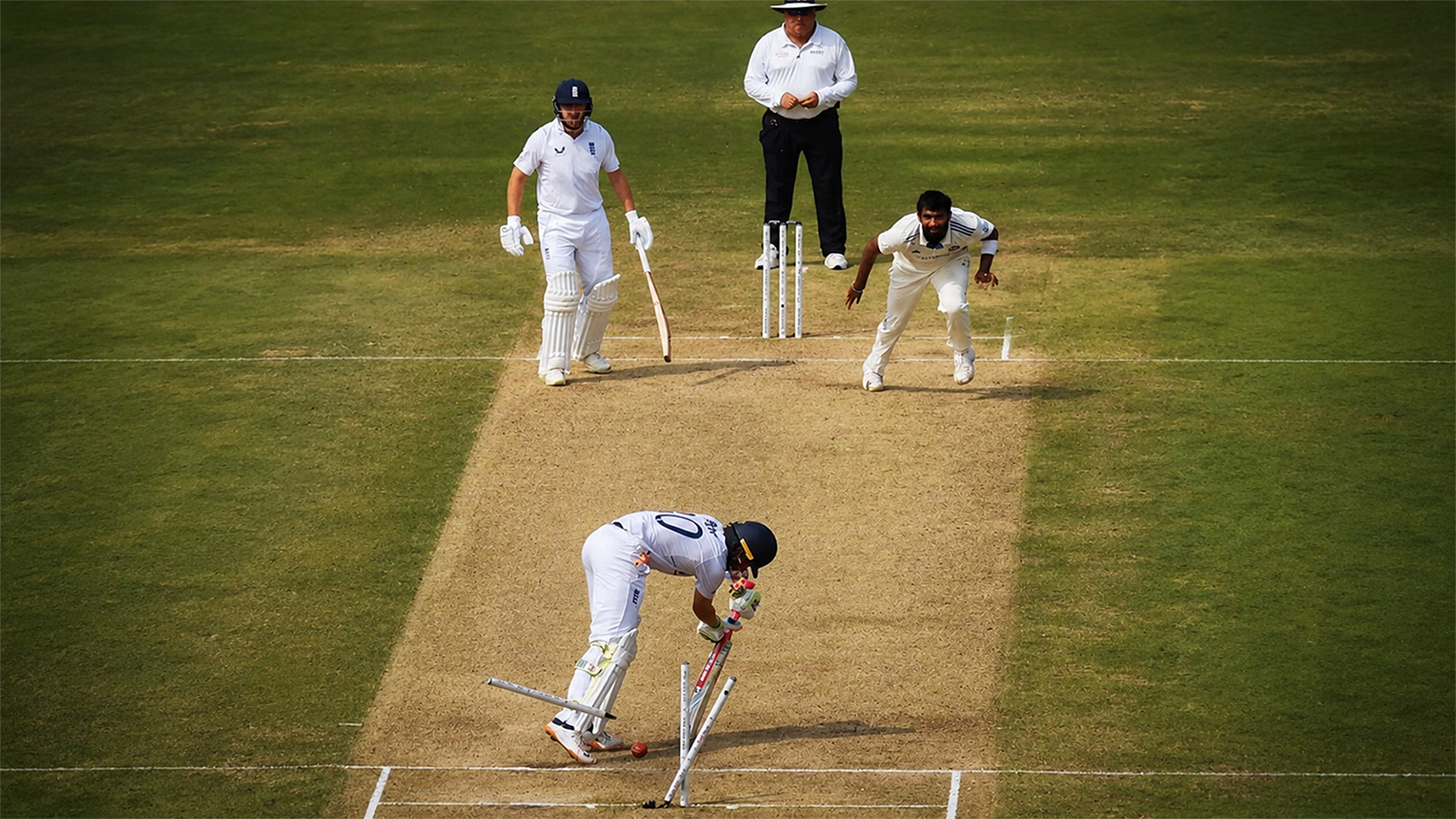
A good yorker leaves the batter almost no room. It lands at the feet, jams the bat and threatens the base of the stumps.
If the yorker is so effective, why can’t every ball be a yorker?
Any bowler can try six yorkers in an over. Landing six is another matter. The margin is tiny. Miss by a little and the batter gets a half-volley or a full toss. Miss badly in the other direction and it can become a waist-high full toss.
Why Every Ball Can’t Be a Yorker
A good-length ball can miss its mark slightly and still be awkward. A yorker usually cannot. That tiny margin is the main reason every ball can’t be a yorker. Land it short and it becomes a half-volley. Push it too full and it becomes a full toss.
Length is only half the job. A straight yorker, a wide yorker and one fired at the toes all need different lines. Bowlers therefore mix yorkers with slower balls, bouncers and changes of pace instead of repeating the same delivery.
No Two Releases Are Exactly the Same
A yorker depends on everything that happens before the ball leaves the hand. The run-up, front-foot landing, bowling arm and wrist all affect where it lands.
The action may look identical from one ball to the next, but it never repeats perfectly. A tiny change at release can turn the intended yorker into a half-volley or a full toss. In the nets, the target stays still. In a match, the batter may move after the bowler has begun the run-up.
One 2022 study tracked 707 deliveries from 21 county academy fast bowlers. Only 24.8% of their attempted yorkers landed inside the target zone. Stock balls and bouncers were easier to control. It was an indoor test without a batter, not a full match simulation. Even so, the yorker was the hardest length to repeat.
The Batter Is Not a Stationary Target
The bowler is not always aiming at the same pair of feet. A batter can stand deep, walk across the crease or back away at the last second. Every movement shifts the target. That is why death bowlers practise more than one yorker.
Chris Jordan has described practising three separate targets: the wide yorker, the straight yorker and the leg-stump yorker. His coach would sometimes change the call during the run-up, copying a batter who moved late. The bowler has to read that movement without losing control of the release.
Predictability Helps the Batter
A perfect yorker is still difficult to hit when the batter expects it. But knowing the likely length helps. The batter can stand deeper, clear the front leg or set up for a scoop. Slower balls, bouncers and hard lengths stop them preparing early for the yorker.
Grip matters too. Jordan has spoken about hiding the change between the yorker, slower ball and bouncer. If the batter reads the hand early, the surprise is gone.
A Missed Yorker Can Be Expensive
Under pressure, many bowlers trust a hard length because it gives them more room for error.
A hard-length ball can miss slightly and still climb awkwardly towards the body.
A missed yorker is usually much kinder to the batter. Miss short and it becomes a half-volley. Overpitch it and the batter gets a low full toss. Either one can disappear.
Death Overs Are a Different Test
The death overs are nothing like the nets. The bowler may be tired, the ball may be wet and the batter may be moving before every delivery. One mistake can swing the match.
Under pressure, a bowler can rush the run-up or lose shape at the crease. The plan is a yorker, but the ball comes out as a full toss.
Can a Bowler Deliver Six Yorkers in One Over?
Yes. Nothing stops a bowler from trying. A top death bowler may even land several excellent yorkers in the same over. What no bowler can promise is six perfect ones against a batter who keeps moving.
The target can also change from ball to ball: the base of off stump, the batter’s toes or the wide line outside off. All three are yorkers, but each needs different execution.
Final Takeaway
Bowlers know the value of a yorker. They also know what happens when they miss one. The target is small, the batter can move and no bowling action repeats exactly. That is why the best death bowlers change pace and length instead of forcing the same delivery six times.
Any bowler can aim for six yorkers. No bowler can promise six perfect ones.
Related Reads
Top 10 Hardest Bowling Records in Cricket History