Why 200 Test Matches May Never Be Reached Again
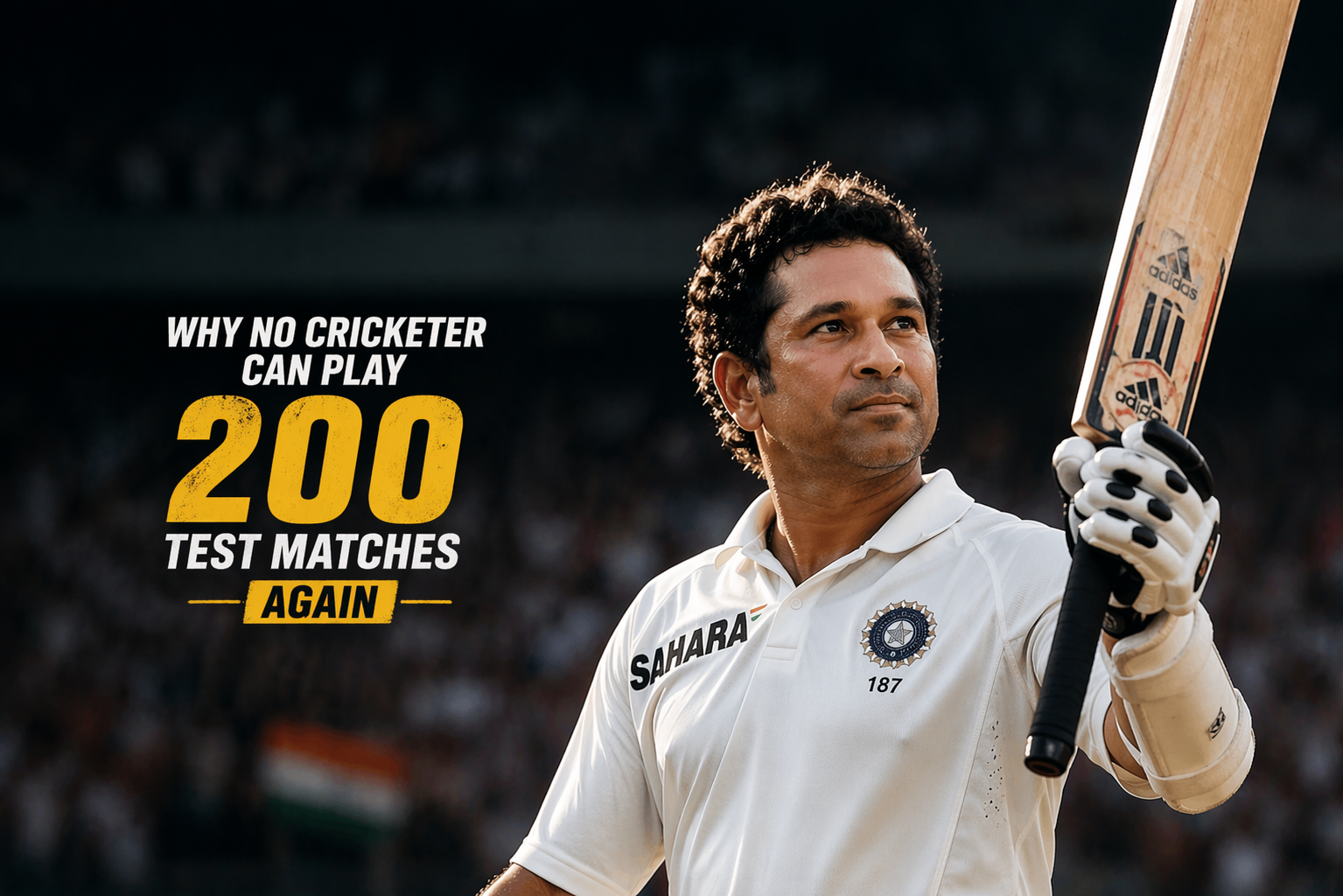
Sachin Tendulkar is the only cricketer to have played 200 Test matches. His 200th and final Test came in November 2013. No one had reached that number before him. No one has reached it since. A Test can last five days. Tendulkar played 200 of them over a 24-year career. During that time, India changed captains, coaches and generations of players. Tendulkar still kept his place until the age of 40.
Joe Root still has a chance. For almost everyone else, there may not be enough Tests or enough years in a career to get close.
It Started at 16
Tendulkar made his Test debut at 16. Starting that young gave him years that most players never get. By the time most players are pushing for an international place, Tendulkar had already been playing Test cricket for years. Those extra years mattered only because he remained good enough to keep his place for more than two decades.
A future player would probably need to debut as a teenager and remain in the side until nearly 40.
Even Anderson Fell Short
James Anderson came closer than anyone else. He played Test cricket for England for 21 years, bowled into his forties and finished with 188 appearances. It still left him 12 matches short.
The Calendar Is the Real Problem
A player cannot choose how many Tests his country plays. In the 2025–27 World Test Championship cycle, Australia were scheduled to play 22 Tests. Several countries had far fewer.
At ten Tests a year, reaching 200 takes 20 seasons. At eight a year, it takes 25. And that is only if the player misses nothing through injury, rest or poor form.
England play more Test cricket than most countries. A player from a team with a lighter schedule may never receive enough matches, however long his career lasts. Five-Test series now survive mainly in a few major rivalries. Many other series last only two or three matches, so missing one tour can remove a large part of a player’s yearly total.
Too Much Cricket, Not Enough Tests
Today’s leading players divide their time between Tests, ODIs, T20 internationals and franchise leagues. A player can be busy almost all year and still appear in only six or eight Tests. Boards now rest players, rotate fast bowlers and sometimes leave senior cricketers out of lower-priority tours. Some players also give up a format because maintaining all three becomes too difficult.
Teams no longer wait for a player to break down before resting him. A player can be fully fit and still be left out because the team wants to manage his workload. That may help him play for more years, but it also costs him appearances.
Fast bowlers are especially unlikely to play every Test in a long season. Then there is selection. One poor year, a new coach or a younger replacement can change a career quickly. Older players are rarely given as much time to recover their form.
Joe Root Still Has a Chance
Joe Root is the only active player with a realistic chance of reaching 200 Test matches. By July 2026, he had played 166 Tests. He still needed 34. England play enough Test cricket for Root to get there. He would probably need around three more busy years without a serious injury or a long run of poor form. He may do it.
Root debuted at 21, plays for the busiest Test nation and has rarely missed matches. Almost everything has worked in his favour, yet he is still well short of Tendulkar.
Why 200 Test Matches May Remain Out of Reach
Root may still join him. After Root, however, there are few obvious candidates. Modern players start later, miss more matches and divide their careers across several formats. Many countries also play too little Test cricket.
The problem is not only finding another player good enough to last that long. It is finding one whose country will give him 200 Test matches to play.
Related Reads
Sachin Tendulkar Records That May Never Be Broken in Cricket History