Why a 300 km/h Tennis Serve Is Almost Impossible
A 300 km/h tennis serve sounds like a record someone will eventually reach. Players are stronger, training has improved and modern rackets help them generate more power. But 300 km/h is not a small step beyond the current record. It would require far more racket speed and put much greater force through the player’s shoulder, elbow and back. The ball would still have to land inside the service box.
The Final 37 km/h Is the Hardest Part
Sam Groth’s 263 km/h serve in 2012 is widely cited as the fastest recorded serve in professional tennis. Another 37 km/h may not sound like much, but producing it would be extremely difficult.
A ball travelling at 300 km/h would carry much more energy than one travelling at 263 km/h. Producing it would require a much faster racket swing, and that speed would have to come from the player’s entire body rather than the arm alone.
A Serve Depends on Perfect Timing
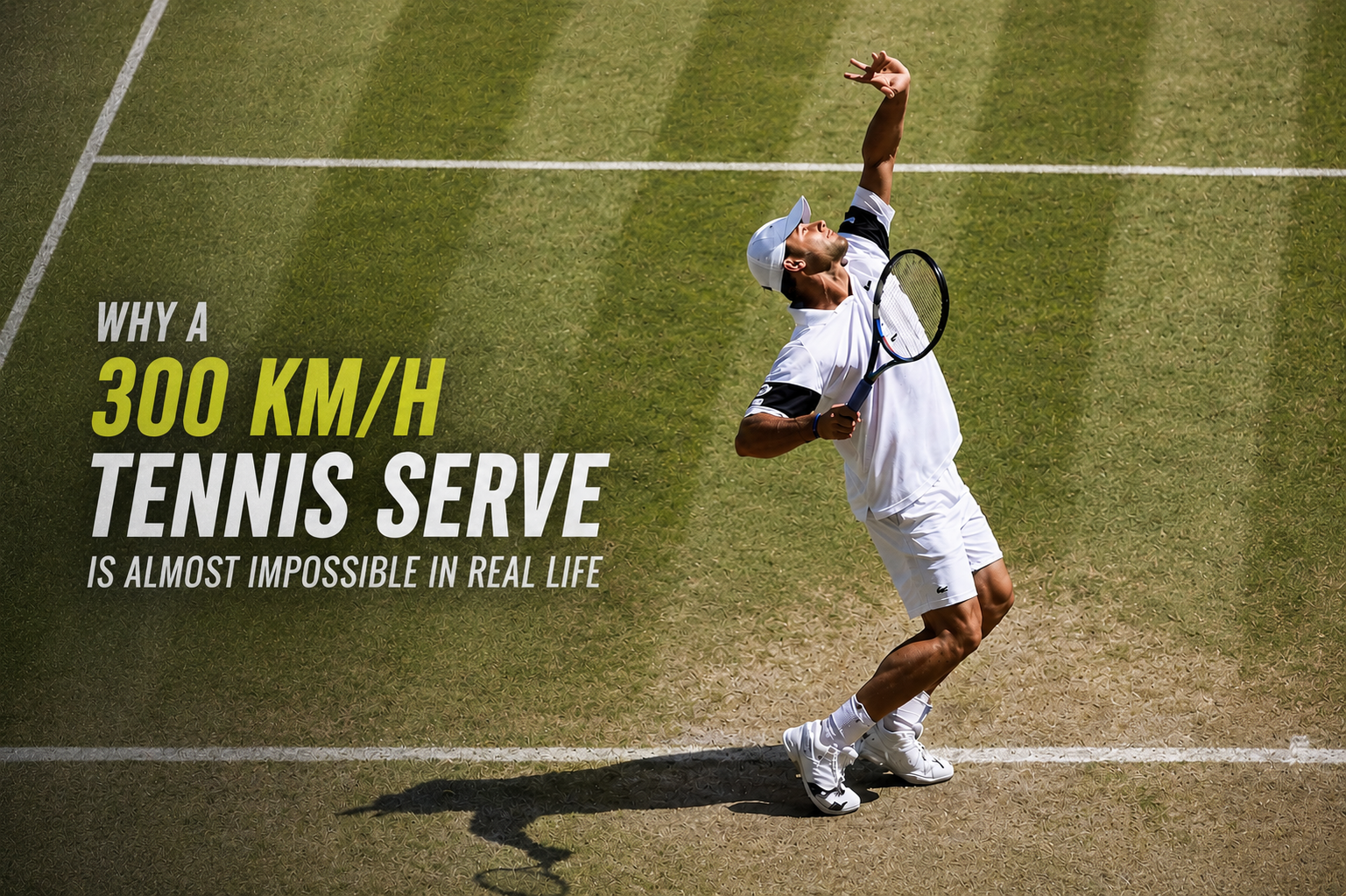
A powerful serve starts with the legs. The force then moves through the hips and torso before reaching the shoulder, arm and racket. When the timing is right, each part adds speed to the next. The fastest servers already perform this movement at enormous speed. Reaching 300 km/h would require even faster body rotation without disturbing the timing. A small change in the shoulder movement or contact point could reduce the speed or send the ball out.
The Shoulder Has to Take the Load
The shoulder takes much of the strain during a serve. It has to rotate the arm at high speed while keeping the joint stable. The elbow, abdominal muscles and lower back also take a heavy load. The harder the player swings, the greater the risk of shoulder, elbow and back injuries.
A player might produce one all-out serve. Repeating it through a match and across a full season is another matter.
The Serve Still Has to Go In
The player has to meet the ball at the right height and angle while adding enough spin to bring it down. At 300 km/h, even a tiny error could send it long or wide. Hitting a 300 km/h tennis serve once in training would not be enough. The serve would have to work under match pressure and remain accurate after the player had already served many times.
The Ball Slows Down Quickly
A tennis ball is light and covered in felt, so air resistance slows it quickly. It also deforms against the strings, absorbing some of the energy from the serve. Better rackets and strings can help, but they cannot remove those losses or produce the missing speed on their own.
The Returner Would Have Very Little Time
A 300 km/h serve would also give the returner very little time. Top players already study the server’s toss, body position and racket movement before contact. Against a 300 km/h serve, they would have to commit to the return even earlier. But returning the ball is not the main barrier. Producing that speed accurately and without injury is the harder problem.
One Serve Is Not Enough
A player may serve dozens of times in a match and thousands of times during a season. The shoulder, elbow, abdominal muscles and spine take the strain every time. Fatigue also affects timing. A movement that feels manageable early in a match may become dangerous once the body starts to tire.
Will We Ever See a 300 km/h Tennis Serve?
No one knows the exact human limit, and Sam Groth’s record could still be broken. But 300 km/h would require a much bigger jump in racket speed and physical force. The player would then have to control that serve and repeat it without damaging the body. The final 37 km/h is far harder than the number suggests.
Final Takeaway
Physics does not stop a tennis ball from travelling at 300 km/h. The problem is producing that speed with the human body. The player would have to swing much faster than today’s biggest servers while keeping the ball inside the service box. The shoulder, elbow and back would also have to handle that load repeatedly.
A one-off 300 km/h tennis serve cannot be ruled out completely. But using it safely and reliably in professional tennis is unlikely.
Related Reads
Rafael Nadal Records That May Never Be Broken
Roger Federer Records That May Never Be Broken
Novak Djokovic Records That May Never Be Broken in Tennis History