Why Usain Bolt’s 9.58 Seconds May Never Be Broken
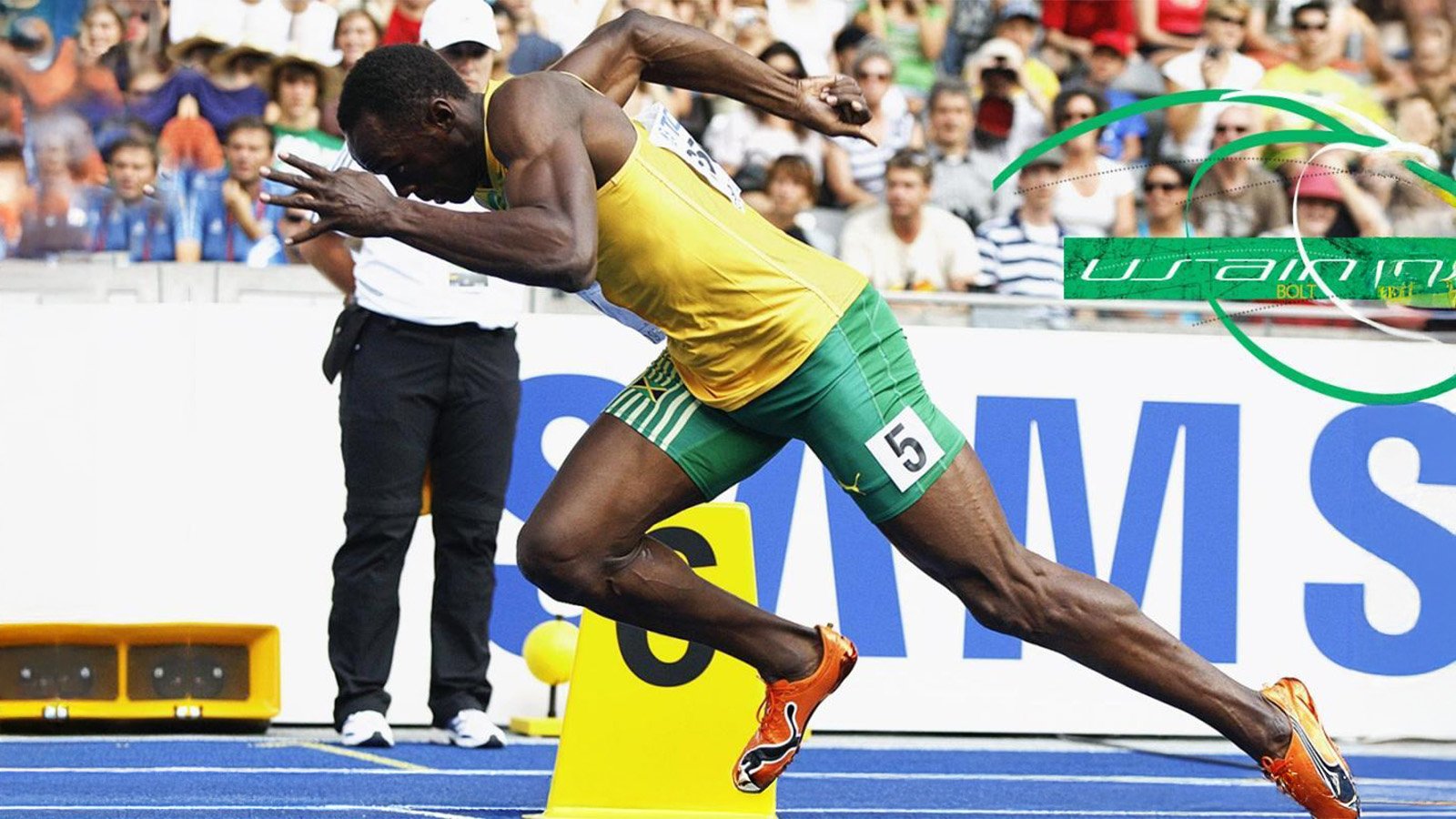
On 16 August 2009, Usain Bolt ran 100 meters in 9.58 seconds. More than fifteen years later, no one has run faster. Sprinting has moved forward since then. Tracks are quicker. Training is sharper. Recovery and nutrition are better understood. The 9.58 record has not moved.
The reason is simple. Bolt’s record was not just a fast race. It was a rare mix of body shape, power, stride length, timing and conditions. To beat it, another sprinter has to get almost everything right in the same race.
Human Speed Has a Limit
The 100 meters looks simple from the outside. Start fast, build speed and reach the line first. But at world-record level, the body has very little room left. A sprinter has to hit the track with huge force and still get the foot off the ground quickly. At that speed, even a tight shoulder or one poor step can cost a hundredth of a second.
Bolt averaged about 37.6 km/h in that race and reached around 44.7 km/h at top speed. From there, improvement is not about trying harder. The body has to produce more force, waste less energy and stay relaxed while moving at a speed very few humans can even touch.
Bolt’s 9.58 was not an ordinary record waiting for the next generation. It was already close to the ceiling.
Bolt Had a Rare Sprinting Body
Bolt was not built like the usual 100-meter sprinter. At 6 ft 5 in, he was unusually tall for the event. That height could have worked against him, especially in the first few steps, where taller runners often take longer to get moving. Bolt made it work. Once he reached full speed, his long stride became one of the most dangerous weapons in sprinting.
In his 9.58 race, he needed only about 41 steps to finish 100 meters, while many elite sprinters usually take more. Sprinting is not only about how fast the legs move. It is also about how much ground each step covers without losing rhythm. Bolt could cover more distance with fewer steps and still stay relaxed at high speed. That is rare. Bolt had too many advantages in the same body.
Berlin Gave Him the Right Race
A 100-meter world record also needs the right race. Talent alone is not enough. Bolt’s 9.58 came in Berlin with a legal tailwind of +0.9 m/s. The track was quick, the conditions were good, and Bolt was in peak form. It was also a World Championship final, the kind of stage where great sprinters usually give everything.
A poor start can ruin the race. A headwind can take away the record before the athlete even reaches top speed. Tightness in the final 20 meters can turn a world-record run into just another great performance. So the next athlete cannot just be good enough. He needs the right day, the right wind, the right track and almost no mistakes.
The Air Starts Pushing Back
At Bolt’s speed, even the air becomes a problem. The faster a sprinter runs, the harder the air pushes back. A small increase in speed needs a much bigger increase in power. Taking 0.01 seconds off 9.58 is not a small job. At that level, a sprinter has to find time in places where almost nothing is left. That is why training alone may not be enough. Near the limit, every hundredth becomes harder to remove.
Bolt Did Not Even Have the Perfect Start
Bolt was not even the sharpest starter. Many shorter sprinters came out of the blocks faster. Bolt often needed a few steps before his long stride fully opened. Once he got upright and started rolling, the race changed. His middle phase and final meters were so strong that a slightly slower start did not hurt him much.
For someone to break 9.58, matching Bolt’s top speed may not be enough. The next athlete may need a better start than Bolt, similar top speed, and the ability to hold that speed through the final meters. That is a very rare combination.
The Limit May Not Be Far Below 9.58
Nobody knows the fastest 100 meters a human can ever run. Someone may still break 9.58 one day. Sport does not always respect predictions. But the space below 9.58 may be very small. Some estimates put the human limit around the mid-9.5 range. If that is close, Bolt did not leave much room for the next generation.
Final Takeaway
Usain Bolt’s 9.58 has lasted because it was more than a great run. It was the right body, the right speed, the right rhythm and the right day.
To break it, a sprinter will need rare genetics, huge power, clean acceleration, relaxed top speed and near-perfect conditions. Even then, the gain may be only a few hundredths. That is why Bolt’s record still feels different. It can be broken in theory. But in real life, it is sitting very close to the edge of human speed.
Related Reads
Why Can’t Humans Run 100 km/h? The Biological and Physics Limits Explained
Why a 300 km/h Tennis Serve Is Almost Impossible in Real Life
Novak Djokovic Records That May Never Be Broken in Tennis History