The 10 Hardest Batting Records in ODI and Test Cricket
Batting records are falling faster than they used to, but the hardest batting records are still holding firm. A score above 300 no longer surprises anyone in one-day cricket. Test teams are willing to chase targets that would once have ended in a handshake. Batters have better equipment, detailed video analysis and far less time to play themselves in. Yet some numbers in the record book still look absurd. Some belong to players nobody else could match. Others took twenty years to build. A few needed the right pitch, the right opposition and enough time for one batter to keep going.
Some of these records are safer than others. Joe Root is now close enough to threaten two of Sachin Tendulkar’s Test records, while Wiaan Mulder reached 367 not out in 2025 before South Africa declared. But coming close is not the same as breaking one.
1. Don Bradman’s Test Average of 99.94
Don Bradman scored 6,996 Test runs and was dismissed only 70 times. That left him with a career average of 99.94. He needed four runs in his final innings to finish with an average of exactly 100. Instead, Eric Hollies bowled him for a duck. Even that final duck hardly changes how ridiculous the number looks. An average in the mid-50s is enough to make someone a Test great. Staying above 60 for years is rare. Bradman finished at 99.94.
A batter chasing Bradman would have no room for an ordinary season. One poor series would drag the average down. So would a difficult tour or a decline near the end of the career. To finish anywhere near 100, the batter would have to dominate almost from his first Test to his last. Playing longer can help with career totals. It cannot help anyone maintain an average of 99.94.
2. Sachin Tendulkar’s 15,921 Test Runs
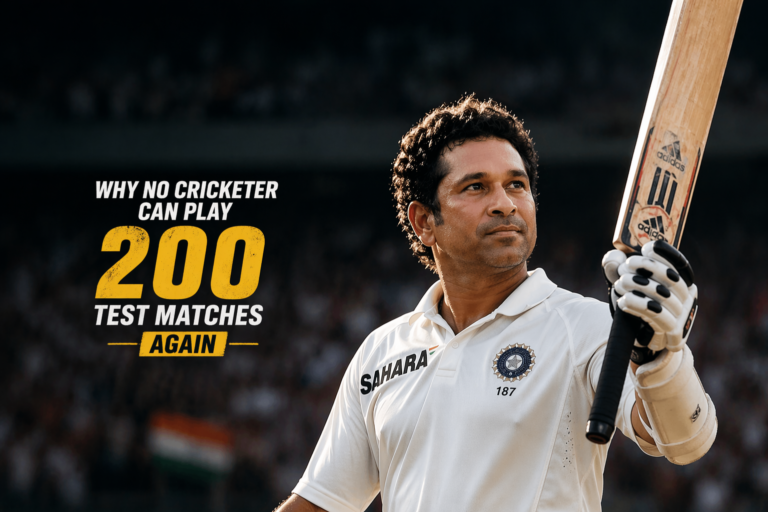
Sachin Tendulkar played Test cricket from the age of 16 until he was 40. Across 200 matches, he scored 15,921 runs. The number was built over 24 years. Tendulkar had to survive injuries, adjust his batting as he aged and remain good enough to keep his place while every opponent studied him closely.
For years, the record appeared comfortably out of reach. Joe Root has changed that. He passed 14,000 Test runs in June 2026 and became only the second batter to reach the mark. Now, for the first time, the record looks genuinely threatened. Root still needs almost 2,000 runs, and he is already at an age when most Test careers begin to slow down. He must stay fit and keep scoring for several more seasons. This is probably the record most likely to fall. Even so, Root still has a long way to go.
3. Rahul Dravid’s 31,258 Balls Faced in Test Cricket
Rahul Dravid faced 31,258 deliveries in Test matches. No batter has faced more. That is more than 5,200 six-ball overs directed at one man. No number describes Rahul Dravid better. His job was often to remove the shine from the new ball, wear down fast bowlers and keep India in the game when conditions were at their worst. A score of 70 made over four hours could matter as much as a faster century from someone batting later.
To pass Dravid, a batter would need a long career, a regular place near the top of the order and the patience to stay there for hours. That last part is becoming harder to find. Teams still value defence, but batters are also expected to keep the scoreboard moving and turn pressure back onto the bowling side. Someone may one day play as many innings as Dravid. Finding another batter who can face that many balls is much harder.
4. Sachin Tendulkar’s 51 Test Centuries
A Test century can disappear because of one good delivery, a poor decision or a mistake made after five hours of batting. Tendulkar managed to reach three figures 51 times. Tendulkar did not reach 51 through one great run of form. He made hundreds in different countries, against several generations of bowlers and at almost every stage of his career. He also played 200 Tests, something very few cricketers will ever do.
Root already has 41 Test centuries, so 51 no longer looks untouchable. Ten more could still take several strong seasons. By then, age and workload may matter as much as form. One great spell of form is not enough. A batter has to keep making hundreds deep into his thirties.
5. Don Bradman’s 12 Test Double Centuries
Bradman made 29 Test hundreds. Twelve of them became double hundreds. He achieved that in only 80 Test innings. Kumar Sangakkara came closest with 11 double centuries, but needed a much longer career to get there. Brian Lara finished with nine. Most great Test batters never came close to double figures.
Making a hundred is hard. Turning it into 200 is harder. The batter has to survive the second new ball, changing fields, tired footwork and the temptation to attack after already spending hours at the crease.
Faster scoring can help, but the match often gets in the way. Captains declare, rain takes time out of the game and teams rarely allow one batter to occupy the crease for nearly two days. The hard part is not reaching 100 once. It is turning 12 of those hundreds into double hundreds.
6. Brian Lara’s 400 Not Out
Brian Lara’s 400 not out against England in Antigua remains the highest individual score in Test cricket. With Lara’s record, the batting is only part of it. A batter needs a flat pitch, plenty of time and an opposition that cannot find a way to dismiss him. Even then, the captain may decide that trying to take 20 wickets matters more than chasing an individual record.
Wiaan Mulder showed how close the record can come to falling. He reached 367 not out against Zimbabwe in 2025, with Lara’s total only 33 runs away, but declared South Africa’s innings at 626 for five. Mulder proved that 400 is still within reach. He also showed why Lara’s record may survive: at some point, the team has to think about winning the match. Another batter will probably get close. Whether his captain allows him to continue is another question.
7. Virat Kohli’s 54 ODI Centuries
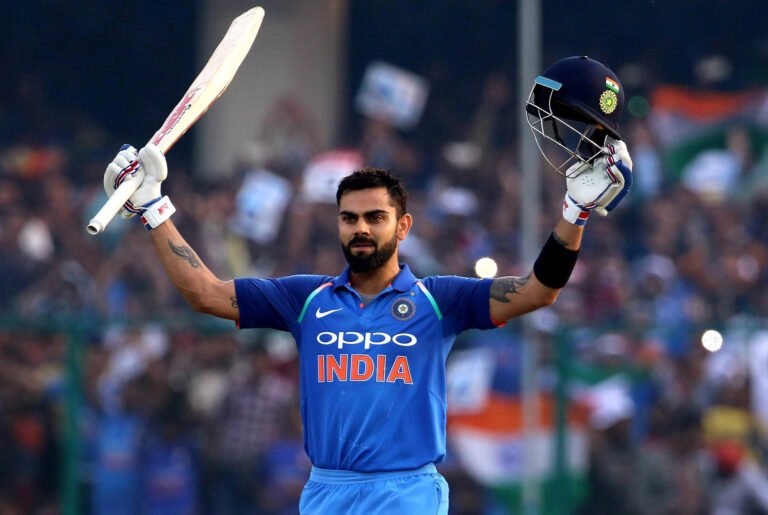
Virat Kohli has taken the ODI century record beyond the 49 hundreds made by Tendulkar. His total stood at 54 in July 2026. Kohli’s batting position also helped him build this record. He spent most of his career at No. 3, usually arriving early enough to build a long innings. Many came in run chases, where he judged the required rate better than almost anyone and often stayed until the target was reached.
A future batter may score hundreds faster than Kohli. The bigger problem will be getting enough ODI matches. International calendars are crowded, and players increasingly divide their time between Tests, T20 leagues and shorter bilateral ODI series. A batter can have a better century rate than Kohli and still finish well behind because he never receives the same number of innings. Kohli may also add a few more before he is finished.
8. Sachin Tendulkar’s 18,426 ODI Runs
Tendulkar played 463 ODIs and scored 18,426 runs. Tendulkar’s ODI career began before opening the batting became the attacking role it is today. He helped change that by going after the new ball while still batting deep into the innings. He kept scoring through changes in rules, equipment and bowling plans.
Kohli is the nearest serious challenger, but he still has a large distance to cover late in his career. Future players may find the gap even harder to close because reaching 18,000 runs requires hundreds of international matches. The real obstacle is not the runs. It is the number of matches. Someone may score as heavily as Tendulkar. Getting 463 ODIs in which to do it is the harder part.
9. AB de Villiers’ ODI Average and Strike Rate
This is not a record in the usual one-number sense. AB de Villiers finished his ODI career with an average of 53.50 and a strike rate of 101.09 across 228 matches. Plenty of batters have scored faster. Others have maintained higher averages. Very few have stayed above 50 while scoring more than a run a ball over such a long career.
Usually, the harder a batter attacks, the more often he gets out. De Villiers kept scoring at more than a run a ball while averaging above 50 across 228 matches. He also did it in different roles, from repairing an innings to finishing one. More batters will finish with strike rates above 100. Very few will pair that with a 50-plus average across 200 matches.
10. Rohit Sharma’s 264 and Three ODI Double Centuries
Rohit Sharma owns the highest individual score in men’s ODI cricket: 264 against Sri Lanka in 2014. He is also the only batter to have made three ODI double centuries. The first record could fall in one remarkable afternoon. The second requires the same player to produce that kind of afternoon three times.
An ODI double hundred usually needs an opener, a good batting pitch and almost the full 50 overs. The batter has to attack for hours without giving his wicket away. Even then, he needs enough of the strike to reach 200.
More double hundreds will be scored. Batters are stronger and teams are comfortable attacking from the first over. But 264 is still a long way beyond 200, and making three double hundreds is much harder than making one. One double hundred can happen. Rohit did it three times.
Why the Hardest Batting Records Are So Difficult to Break
Better bats and faster scoring can help players make bigger scores. They cannot guarantee a twenty-year career, hundreds of international matches or enough time to bat for two days. Some of these records may fall. Joe Root has a real chance of passing Tendulkar’s Test run total, and another batter will eventually get close to Lara’s 400.
Others may survive because modern cricket no longer gives players the same amount of time.
Future batters may be every bit as good. They may simply not play enough Tests or ODIs to catch these numbers.
Related Reads
Top 10 Hardest Bowling Records in Cricket History
Top 10 Hardest Wicket-Keeper Records in ODI & Test Cricket That May Never Be Broken
The Hardest Fielding Records in ODI and Test Cricket That May Never Be Broken