
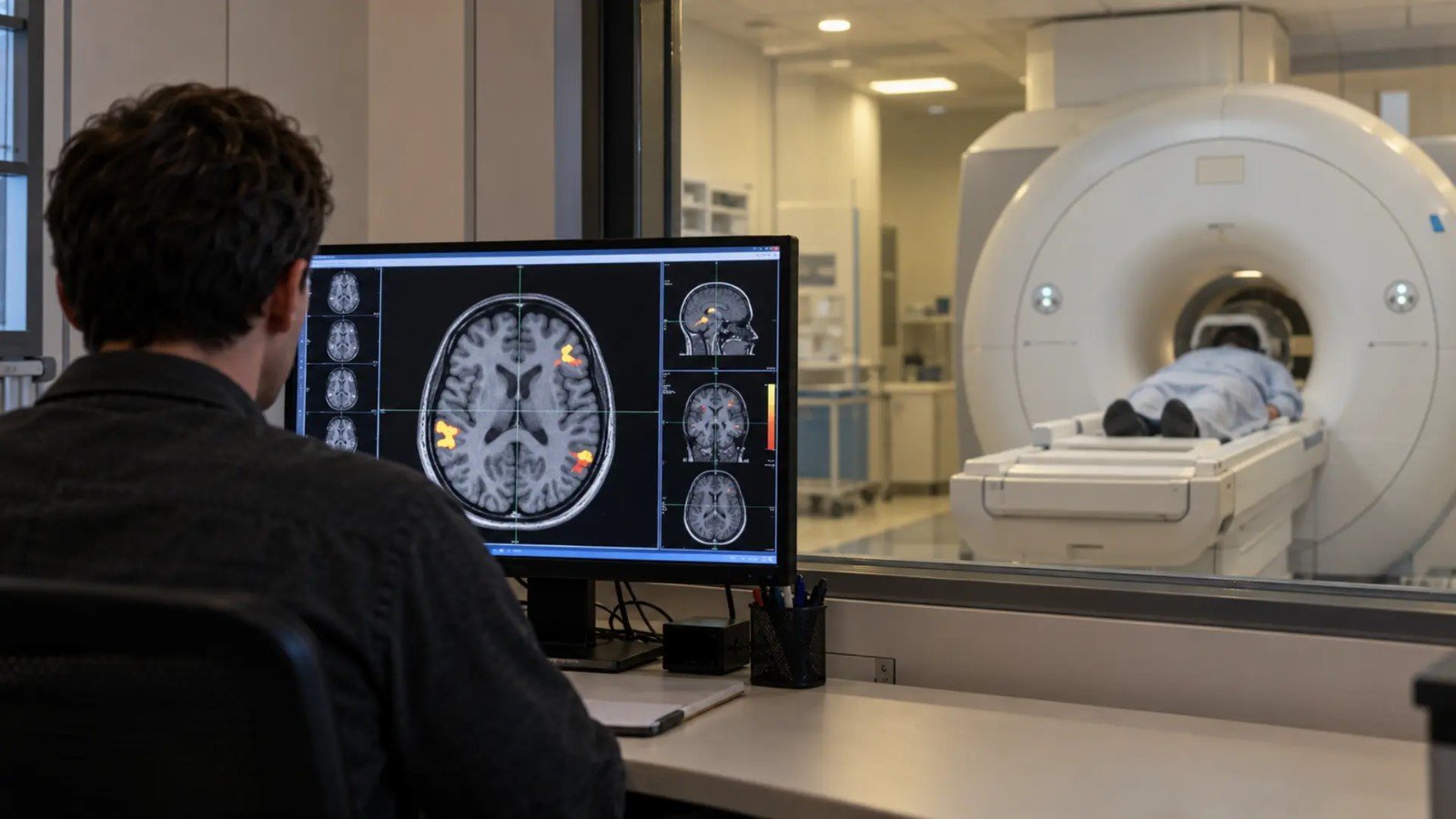
Why Is It Not Possible to Read Minds Like in the Movies?
By Why Is It NOT Possible? Editorial·October 20, 2026·6 min read
In a 2023 experiment at the University of Texas at Austin, a participant listened to someone say, “I don’t have my driver’s license yet.” A computer analysing the listener’s brain scans produced: “She has not even started to learn to drive yet.” Someone can take driving lessons for months without getting a licence. The computer had changed that detail, along with the person the sentence referred to.
The study, published in Nature Neuroscience, showed that researchers could recover aspects of a story’s meaning from brain activity. They also tested the system while participants imagined telling stories. But recovering a related meaning is a different achievement from reproducing someone’s exact thoughts.
In a film, the mind reader gets the words, the memories and their meaning almost immediately. The person being read needs no preparation and may be trying to hide everything. Real experiments have to deal with each of those difficulties separately.
The decoder had to learn first
Before the Texas system could generate useful text, the researchers needed examples of how each participant’s brain responded to known material. The original decoder used roughly 16 hours of recordings from each main participant while they listened to podcasts in an fMRI scanner.
The researchers could compare what the person heard with the activity recorded at the time. They used those examples to train a decoder: software that learned relationships between brain activity and meaning. They then tested it with material outside those training recordings. Researchers have since reduced that preparation.
In work announced in 2025, the Texas team adapted an existing decoder to a new person using about an hour of fMRI recordings while that person watched silent videos. The method used information learned from another participant, but still needed recordings from the new user. Cooperation mattered, too. In the original study, participants could disrupt the recovery of the story they were hearing by deliberately thinking about something else.
What the recordings leave out
Even a well-trained decoder can work only with the information its recording equipment captures. An EEG uses electrodes on the scalp to record electrical activity from large groups of neurons. It follows changes quickly, but identifying their precise sources is difficult. Different patterns inside the brain can produce similar measurements at the scalp.
The Texas experiment used fMRI. Rather than recording neurons firing directly, it measured changes associated with blood oxygenation. That response develops over seconds. Several rapid changes in neural activity can therefore contribute to a slower measurement that does not distinguish them individually.
Implanted electrodes provide more direct recordings from nearby cells. Their coverage is limited, however, to the places being sampled. These are different kinds of incomplete information. If a recording fits several possible explanations, the software has to work out which is most likely. More computing power can improve that calculation, but it does not automatically reveal details the equipment failed to distinguish.
Not every thought has words
There is another problem with the voice we hear in movie mind-reading scenes: much of our thinking does not take the form of speech. You can recognise a friend’s face without silently describing it. You can picture a room or plan how to move around an obstacle without narrating each step.
Some people with severe language impairments can still solve arithmetic problems and reason logically, even though they struggle to use language. A device that decoded silent speech would miss thoughts expressed in other ways. Describing those thoughts would require a further step: translating nonverbal information into language.
The computer may supply the sentence
In a 2025 Science Advances study, Tomoyasu Horikawa developed a method called “mind captioning”. It generated descriptions from fMRI recordings while people watched or recalled videos. The method could work even when activity from the brain’s language regions was excluded.
The participants did not need to silently compose the sentences that appeared on the screen. The system was translating aspects of visual content into words. A sentence might describe something a person pictured without being a sentence they ever thought.
Language models also help decoders choose likely words and phrases. Their knowledge of language can make the output readable while leaving uncertainty about particular details. In the Texas study, the system could recover meaning without reliably recovering the original wording. The driving-licence example shows why a plausible sentence should not automatically be treated as a transcript.
Brain implants can pick up some inner speech
A 2025 study published in Cell involved four people with severe speech and movement impairments who had tiny electrode arrays implanted in their brains. Researchers recorded patterns associated with imagined speech in motor areas. They could decode some of that speech, though less successfully than speech the participants physically tried to produce.
For someone unable to speak, using imagined speech could make communication less tiring. It also raises a concern that follows directly from the technology: a device might pick up words its user intended to keep private. The team tested safeguards, including an imagined password to activate inner-speech decoding.
They also trained systems designed for attempted speech to ignore inner speech more effectively. Stanford’s account of the study explains both approaches. The recordings came from selected areas near the implants. They did not capture everything the participants were thinking.
A thought would still need explaining
Suppose a future device correctly decodes the words, “I took the money.” The person might be remembering a theft, rehearsing dialogue or imagining an accusation. Getting the words right would not settle which explanation was true. Likewise, identifying a scene someone pictured would not establish that they had witnessed it.
A film can show a memory and tell the audience exactly what it means. A real decoder would need additional evidence before its output could support the same conclusion. Recovering mental content, identifying someone’s intention and establishing what happened are separate tasks.
Final Takeaway
The Texas decoder recovered enough information to produce a sentence about driving, but it changed details that would matter if someone treated the result as an exact account. Movie mind reading demands far more: useful recordings without preparation, accurate recovery of private thoughts and an understanding of what those thoughts mean. No demonstrated system combines those abilities.
Brain decoding can already reveal information people have not spoken aloud, and it could help people who cannot speak communicate more easily. This progress does not demonstrate the unrestricted access to another person’s mind that films portray.