
Why Is It Not Possible to Build a Perpetual Motion Machine?
By Why Is It NOT Possible? Editorial·October 14, 2026·8 min read
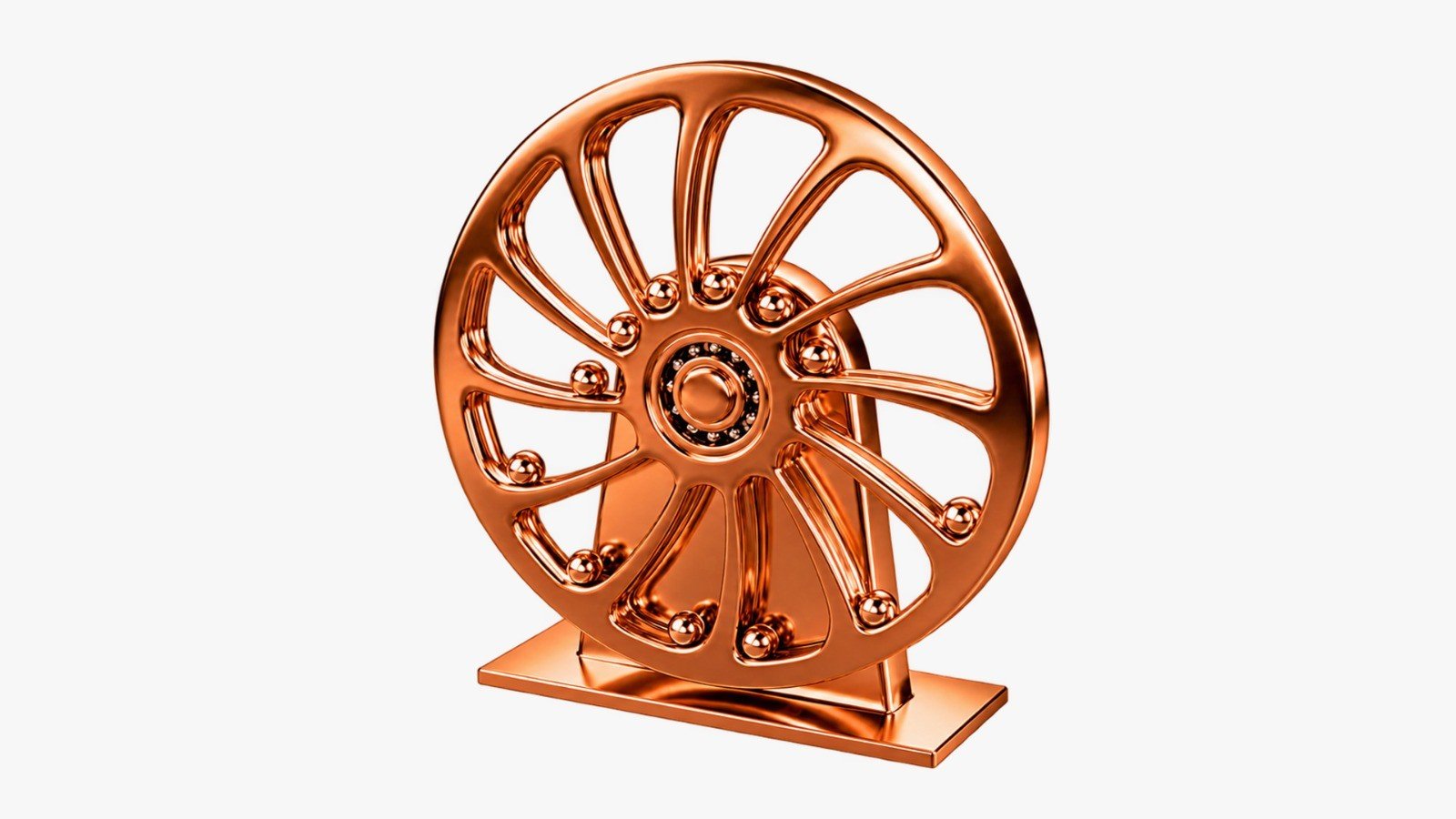
Imagine a wheel with weights that slide back and forth as it turns. The weights on one side sit farther from the centre, giving them more leverage. With the right arrangement, it looks as though that side should always pull the wheel down. Now connect that wheel to a generator. If it could keep turning without any help, you would have electricity without paying for fuel or relying on sunlight, wind or flowing water.
People have spent centuries trying to build machines that work this way. Some have used complicated arrangements of gears and weights. Others have tried magnets, water and floating objects. A few designs look remarkably convincing, at least until you follow everything through a complete cycle. None has managed to keep producing power indefinitely without an energy source. Why not? And where exactly do these machines go wrong?
Can Something Really Keep Moving Forever?
In theory, yes. An object moving without friction or any other resistance could continue moving indefinitely. Newton's first law of motion allows that. But keeping something in motion is different from using that motion to produce electricity.
Think of a heavy flywheel spinning inside a vacuum on nearly frictionless bearings. It might keep turning for a remarkably long time. Connect it to a generator, however, and the generator begins taking energy from the rotating wheel. As electricity is produced, the wheel slows down.
Even a perfectly frictionless wheel would lose speed if we kept extracting energy from it. A wheel spinning for years would be impressive. It still wouldn't explain how to keep drawing power from it.
Two Types of Perpetual Motion Machines
Physicists distinguish between two kinds of perpetual motion machines.
Perpetual Motion Machine of the First Kind
This machine would produce energy without receiving an equivalent amount from somewhere else. Suppose a generator delivers 1,000 joules of energy while the entire machine receives only 800 joules and its stored energy remains unchanged. The remaining 200 joules would have to appear from nowhere. That would violate the first law of thermodynamics, which says energy cannot be created or destroyed. It can only be transferred or converted from one form into another.
A machine can turn electrical energy into motion or motion into electricity. It cannot create additional energy along the way.
Perpetual Motion Machine of the Second Kind
This type does not claim to create energy. Imagine a machine that takes heat from the surrounding air and converts all of it into electricity, continuously, without needing any other energy source. The energy already exists in the air. Why shouldn't we be able to use it?
The second law of thermodynamics sets the limit. A heat engine needs a temperature difference, with heat flowing from a hotter place to a cooler one. It cannot take heat from a single source and convert all of it into useful work, cycle after cycle. That is why a machine cannot simply draw heat from a room at a uniform temperature and turn it all into electricity forever.
Why Gravity Wheels Never Keep Turning
The overbalanced wheel is one of the oldest perpetual motion ideas. Weights extend farther from the axle on one side, giving that side greater turning force. As the wheel rotates, the weights shift to maintain the apparent imbalance. But follow one weight through an entire rotation. It may help turn the wheel while moving downward. Eventually, though, it must return to its original height and position. Moving it back requires energy.
In an ideal machine, the work gained during the useful part of the cycle is cancelled by the work needed elsewhere in the cycle. Adding springs, tracks or swinging arms does not change the result. Those parts merely change how the weights move. Gravity can make a weight fall. It cannot lift that same weight back to its starting height for free.
Why Can't Magnets Keep a Wheel Turning?
Magnets seem like a better option because they can exert force without direct contact. Place a steel ball near a strong magnet and it moves towards the magnet. No battery, motor or fuel is needed for that attraction.
Now try making the ball repeat the movement. Once it reaches the magnet, you have to pull it away or arrange for it to move past the magnet. Getting it away takes work too. By the time the ball returns to where it started, the magnetic attraction has provided no extra energy. Adding more magnets around a wheel only changes where it speeds up, slows down or gets stuck. A fixed arrangement of permanent magnets cannot leave the wheel with extra energy after a complete rotation.
Electromagnets offer more control. They can be switched on and off at the right moments to keep a rotor moving. But switching them requires electricity, which is how an ordinary electric motor works.
What Goes Wrong with Water and Floating Machines?
One proposed design uses a continuous belt carrying hollow floats through a tank of water. Because the floats are buoyant, they rise through the water and pull the belt upwards. At the top, they move around the belt and return to the bottom. But each float must be pushed back underwater before it can rise again.
Pushing a float into the water means working against buoyancy and water pressure. For a complete cycle that returns everything to its original condition, the energy needed to put the floats back cannot be less than the energy gained from their rise.
Another design uses falling water to turn a wheel that drives a pump. The pump sends the water back to the top so it can fall again. Raising the water requires at least as much energy as its fall can provide. Friction and other losses mean the actual pump needs even more.
Real hydroelectric plants receive a continuing supply of water from higher ground. They are using energy provided by the water cycle, not recycling the same energy endlessly.
What If a Generator Powers Its Own Motor?
Connect a motor to a generator. Use electricity to start the motor, then send the generator's output back to the motor. Once everything is running, disconnect the original power supply. Wouldn't the motor keep driving the generator while the generator keeps supplying the motor?
In practice, the system slows down because neither device is perfectly efficient. Motors and generators produce heat. Bearings have friction, and electrical resistance causes further losses.
Suppose we supply 100 joules of electricity to a motor that is 90% efficient. It converts 90 joules into mechanical energy. Now connect it to a generator that is also 90% efficient. The generator produces only 81 joules of electricity. The remaining 19 joules have been lost as heat and other forms of energy. We started with 100 joules, but only 81 came back. That is not enough to keep the motor running at the same level.
Suppose we somehow eliminated every one of those losses. Even then, the generator could only return the energy supplied by the motor. There would be nothing left over to power a light, charge a phone or do any other useful work.
Why Do Some Perpetual Motion Machines Appear to Work?
A spinning wheel can make a convincing demonstration, especially if it keeps moving for hours. But movement alone proves very little. A heavy flywheel can store a considerable amount of energy. A small motor might be powered by a hidden battery. Some devices draw energy from light, vibrations or changes in temperature and air pressure.
A machine can operate for a long time without anyone visibly supplying power. That doesn't mean it can produce electricity indefinitely. A proper test would require measuring all the energy entering and leaving the machine while it powers an external load. Independent testers would also need to check that the machine is not slowly using up stored energy.
If a wheel starts with a certain amount of rotational energy and ends with less, the electricity it produced was not free. It came from the spinning wheel. The same applies to a battery losing charge, a spring unwinding or a compressed-gas container losing pressure.
A machine running for a week might be impressive engineering. It is not proof of perpetual motion.
Final Takeaway
Most perpetual motion designs look promising because one part of the mechanism really does move as expected. The mistake is assuming that movement can keep the entire machine running. The weight still has to climb back up, the ball has to move away from the magnet, and the float has to go underwater again. All of that takes energy.
Engineers can build machines that waste less energy and run for longer. They cannot create extra energy or turn all the heat from a single source into useful work, cycle after cycle. That is why, after centuries of attempts, no perpetual motion machine has ever worked as claimed.